Cenote Car Wash (Aktun Ha): Tulum Cenotes Off the Cobá Road
Known to almost everyone by the name of a roadside business that closed years ago. Aktun Ha looks unremarkable from the bank and then turns into a drowned forest the moment you put your face in it, eight kilometres out on the Cobá road.
The name comes from an actual car wash
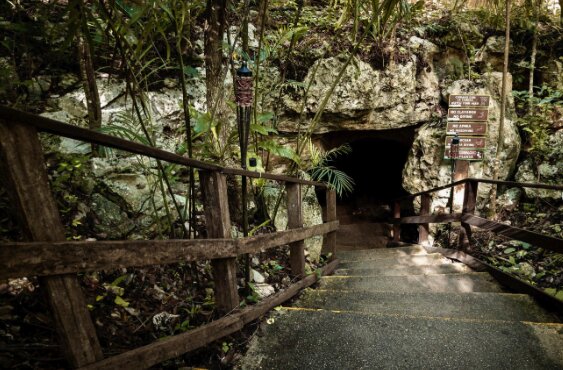
There was once a car wash at the roadside here, where taxi drivers cleaned their cars using the water. The business is long gone; the name stuck so hard that most visitors never learn the real one.
It is the best small story on this coast, and it is true. A cenote that is a door into one of the largest flooded cave systems on earth is known to almost everybody by the name of a vanished roadside business.
Aktun Ha, and what it means
The proper name is Aktun Ha, which is Yucatec Maya and means water cave. Signs at the gate use it, guides use it, and dive shops use it.
If you are looking for it on a map, search either. If you are asking a colectivo driver, Car Wash gets you there faster, which tells you something about how naming works on a road where most of the traffic is visitors.
Lilies on top, a forest underneath
The surface is covered in water lilies in places, which gives the top two or three metres a green cast and makes this look, from the bank, like the least impressive cenote on the list.
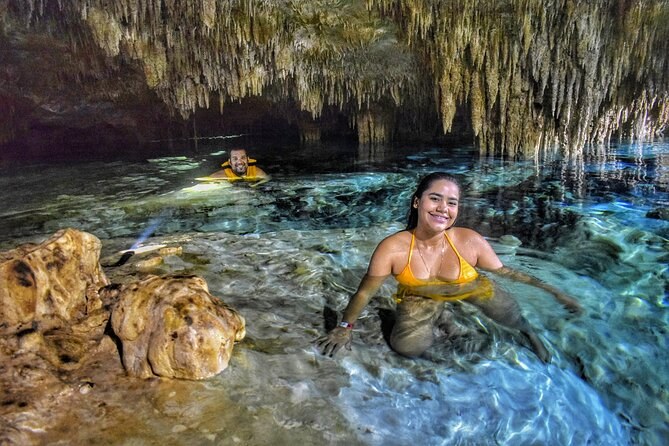
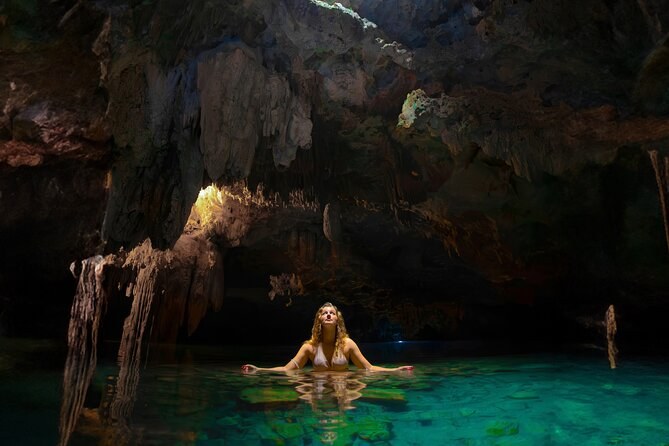
Then you put your face in. Below the lily layer the water goes glass-clear over a drowned garden of branches, roots and fallen trunks, lit from above through the leaves. It is the one cenote here that is better underwater than it is from the edge, and the reversal is the whole appeal.
The lilies are seasonal in extent rather than permanent, spreading through the warm months and thinning back afterwards. Divers photograph the underside of the pads with the light coming through them, which is the single most reproduced image of this cenote and the one thing you cannot see from the bank at all.
Eighteen metres, and what divers do down there
The pond reaches about eighteen metres, and passage runs on from it into the cave system. Cavern and cave divers work here regularly, which is why the car park usually has a van with tanks in it.
None of that concerns a snorkeller. The interesting layer is the first three metres, where the light comes through the lilies. What lies beyond is the same system Dos Ojos opens into, and the same rule applies: past daylight is certification territory.
The wildlife, including the one with teeth
Turtles live here, and so do fish in numbers you can see from the surface. Small crocodiles are occasionally present, which is stated plainly by every serious source on the place and rather less plainly by the enthusiastic ones.
They are small, they keep to the vegetated margins, and they have no interest in a swimmer in open water. After the incident at Casa Cenote in May 2026 the sensible position on any Yucatán crocodile is the same: look, photograph, keep your distance, and never provoke one. The safety page covers what changed and why.
Eight kilometres out, next door to Zacil-Ha
It is eight kilometres from Tulum on the Cobá road, signed on the left, with Cenote Zacil-Ha immediately beyond it. Colectivos pass constantly and a bicycle does the run on flat road.
The two together are the easiest good morning on this coast: a deep pond you snorkel and a shallow pool you sit in, two gate fees, one colectivo, back in town by lunch.
Doing it as part of a Cobá-road morning
Four of the seven cenotes with a page here are on this one road: Calavera at a kilometre and a half, Gran Cenote at four to five, this one at eight, Zacil-Ha at eight and a half.
Three of them fit comfortably in a morning without a car and without booking anything. That is the honest answer to whether you need a tour, and the channel guide costs both versions out rather than assuming one.
Four cenotes sit on nine kilometres of flat tarmac and a bicycle covers the lot, which is the argument for doing this one yourself. The argument against is the start time: the four-hour cenote morning is in the water at Gran Cenote at quarter to nine, and the car parks on this road are full by eleven.
What it costs, and what to bring
Cash in pesos at the gate, no published tariff, and gear hired on site. There is no restaurant and the facilities are basic, which is part of why it is cheaper and quieter than its famous neighbour up the road.
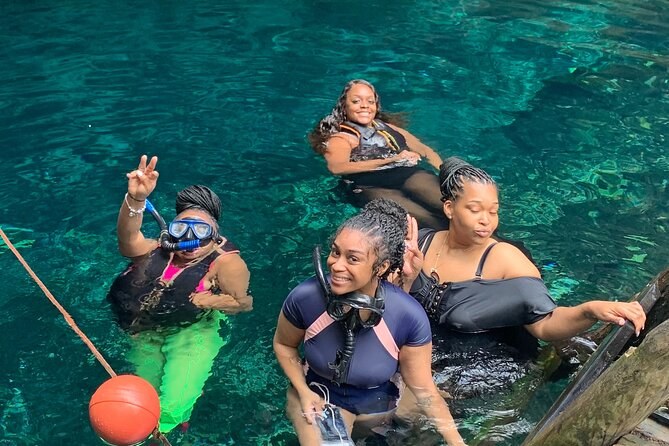
Bring a mask if you own one; the lilies-and-forest effect is entirely wasted without one. Leave the sunscreen at your hotel, as everywhere here — the packing page explains what that rule does to the rest of your list.
| Where | About 8 km from Tulum on the Cobá road, next to Zacil-Ha |
| Type | Open pond cenote with cave passage below |
| Depth | Around 18 m (60 ft) at its deepest |
| Known for | Surface lilies, an underwater forest, turtles — and small crocodiles are occasionally present |
| Reached by | Bike, colectivo or taxi — no tour here goes in |
Cenote Car Wash at a glance. Depths and distances from published survey and guide sources; what a fare covers is read from each operator's own listing.
Compare Tulum Cenote guided tours
Know before you go
Bring a mask or the visit is wasted
From the bank it is a green pond. The drowned forest starts about two metres down and you cannot see it any other way.
Ask for Car Wash, look for Aktun Ha
The signs use the Maya name; the colectivo driver uses the other one. Both get you to the same gate.
Small crocodiles are occasionally present
They keep to the vegetated margins and have no interest in a swimmer in open water. Keep your distance and never provoke one.
The facilities are basic
No restaurant, limited shade, simple changing rooms. Bring water and something to eat if you are staying more than an hour.
Do it with Zacil-Ha
They are five hundred metres apart. One deep and dark, one shallow and bright, one colectivo fare.
Divers work here regularly
If the car park has a van full of tanks, that is why. Give the entry steps to a team carrying cylinders.
Questions about Car Wash
Why is it called Cenote Car Wash?
Because a car wash once operated at the roadside here and taxi drivers cleaned their cars with the water. The business is long gone and the name outlived it. The proper name is Aktun Ha.
What does Aktun Ha mean?
Water cave, in Yucatec Maya. The signs at the gate use it, and so do the dive shops. Colectivo drivers will still get you there faster if you say Car Wash.
Are there crocodiles at Cenote Car Wash?
Small ones are occasionally present, and every serious source on the place says so. They keep to the vegetated margins and have no interest in a swimmer in open water. Keep your distance and never provoke one.
Is Cenote Car Wash worth visiting?
It depends entirely on whether you bring a mask. From the bank it is a green pond with lilies on it. Two metres down it is a drowned forest lit through the leaves, and that reversal is the whole appeal.
Address, hours and the map
Cenote Car Wash
Carretera Tulum-Coba km 8, 77780 Tulum, Quintana Roo, Mexico
Hours
Gates here open at about 8:00am and stop admitting swimmers in the mid-afternoon. Car Wash is run by the owners of the land it sits on, so those edges move and are not published anywhere central.
What it costs
Cash, in pesos, at the gate. No tariff is published for it and none is printed here — see what you pay and to whom for why, and for the departures whose fare covers it instead.
Getting here
Eight kilometres out on the Cobá road, signed on the left, with Zacil-Ha immediately beyond it. Colectivo, bicycle or taxi; the ride is flat the whole way and the two together make one morning.
Coordinates
20.2295°N, 87.4194°W
Nothing bookable here enters Cenote Car Wash — these run the same road
Car Wash is a bicycle and a gate fee away. These three run the same Cobá road and the same coast, reach the cenotes that need a vehicle, and put a guide in the water with you.