Seven cenotes within half an hour of Tulum town, and the difference
between them is not scenery. It is whether there is a roof over your head, how deep the
water goes, and whether anything bookable actually stops there.
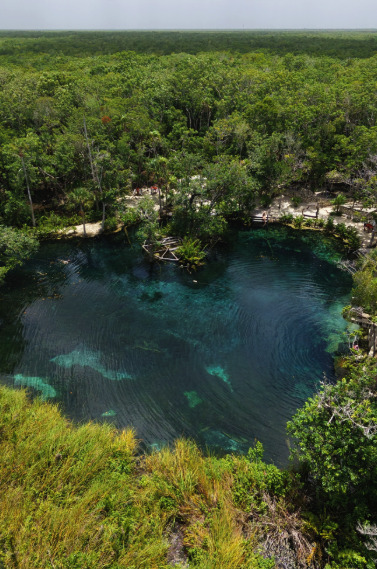
One flooded cave, many doors
The Yucatán has no rivers. Rain falls on porous limestone, sinks, and moves
sideways through the rock in a network of flooded passages that runs for hundreds of
kilometres. A cenote is simply a place where the roof of one of those passages fell in
and left a hole you can climb down.
That matters more than it sounds. Gran Cenote, Dos Ojos and Taak Bi Ha are not three
swimming spots that happen to be near each other — they are three entrances to
Sistema Sac Actun, which has been surveyed at 378.56 kilometres underwater and is the
second-longest underwater cave system known. Swim any of them and you are swimming a
different room of the same place.
Open, cavern, cave — the only three words you need
An open cenote has lost its roof entirely. Sun reaches the water, it
warms up, the edges are shallow, and there is sky above you the whole time. Casa Cenote
and Zacil-Ha are open; so is half of Gran Cenote.
A cavern cenote keeps its roof. Light comes through one opening or
from lamps, stalactites hang to the waterline, and because the sun never reaches it the
temperature holds steady all year. Taak Bi Ha is the purest example here.
A cave goes beyond the point where daylight reaches, and it is closed
to anyone without a full cave certification. No tour listed anywhere takes an
uncertified swimmer into one, and any page that says otherwise is describing a cavern.
The safety page draws the line properly.
The Cobá road, kilometre by kilometre
Four of the seven are strung along one road out of Tulum town, and this is the single
most useful fact for anyone without a car. Cenote
Calavera is about a kilometre and a half out. Gran Cenote is at four to five.
Cenote Car Wash — properly Aktun Ha — is at
eight, and Cenote Zacil-Ha is immediately beyond it at
eight and a half.
Colectivos run that road all morning and stop wherever you ask. A bicycle covers the
whole of it on flat tarmac. You can genuinely do three of those four in a morning for the
cost of the gate fees and a few pesos in shared vans, which is the honest answer to
whether you need to book anything at all.
The coast road, and the one that runs to the sea
Casa Cenote is the odd one and the interesting one. It is fifteen minutes north of
town on the coast highway, and it is not a sinkhole at all — it is the place where
all that groundwater finally reaches the Caribbean, a channel roughly 230 metres long
winding through mangrove.
The water there is brackish, layered fresh over salt, and you can watch the layers
shimmer where they meet. It is also the one with a resident crocodile and, since May
2026, the one with rules about how close you may get to it.
Inside Parque Dos Ojos
North of town off Highway 307 is a park rather than a cenote, and the distinction
catches people out. Parque Dos Ojos contains several cenotes on one piece of land, and
they are not the same swim. Cenote Dos Ojos proper is the pair
of sinkholes the park is named for; Cenote Taak Bi Ha is a
fully enclosed cavern run by a separate Maya cooperative and paid for separately.
It is not true that every Parque Dos Ojos trip swims Cenote Dos Ojos — several
of the departures listed here enter the park and go to Taak Bi Ha instead, which is a
different and arguably better cenote. Read the itinerary rather than the title, which is
what the tour blocks on these pages do.
Which cenote for which day
| Cenote | Type | Depth | Where | Best for | Tours here |
|---|
| Gran Cenote | Half open, half cavern | Shallow at the edges | Cobá road, 4–5 km | A first swim, and turtles | Two |
| Casa Cenote | Open brackish channel | Waist to chest, mostly | Coast road, 15 min north | Floating, paddleboarding, wildlife | Three |
| Cenote Dos Ojos | Cavern, two sinkholes | Deep, with a roofed span | Highway 307, inside a park | Snorkelling a cavern, or cavern diving | One |
| Cenote Taak Bi Ha | Fully enclosed cavern | About 8 m | Inside Parque Dos Ojos | Photographs, and stalactites | Three |
| Cenote Calavera | Roofed sinkhole, entered from above | 3 m at the edge, 15–16 m in the middle | Cobá road, 1.5 km | Jumping, and divers | None |
| Cenote Car Wash | Open pond cenote | About 18 m | Cobá road, 8 km | Lilies, and an underwater forest | None |
| Cenote Zacil-Ha | Open, pool-shaped | About 3 m throughout | Cobá road, 8.5 km | Small children, and a zipline | None |
Depths and distances from published survey and guide sources. The last column counts departures whose own itinerary names that cenote as a stop.
Read the last column against the fourth. The three with no departures are the three
closest to town, which is not a coincidence: an operator has no reason to sell you a ride
to a cenote you could reach on a bicycle. Tulum Cenote tours and tickets covers the rest.
The ones a tour reaches, and the ones you drive to
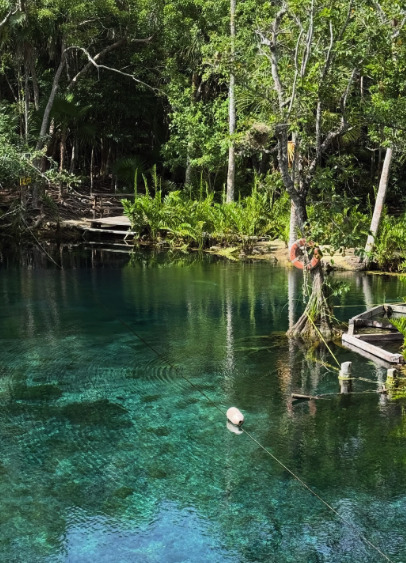
Half open, half cavernThe one almost everybody swims first, and with reason: a shallow open pool on one side, a stalactite cavern you snorkel into on the other, and small freshwater turtles in between.
- How you get in2 departures go in
- WhereAbout 4–5 km north of Tulum on the Cobá road
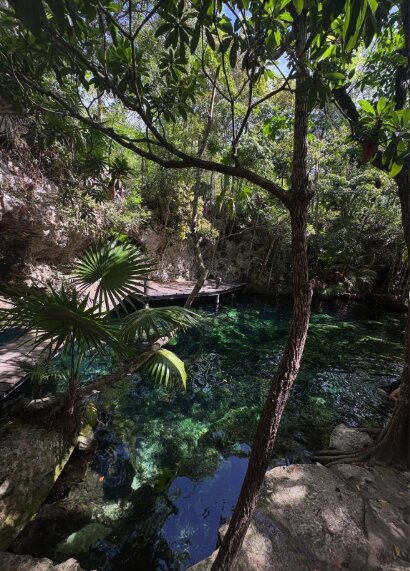
Open brackish channelNot a sinkhole at all but a channel through mangrove, brackish where the fresh groundwater reaches the sea. You float it end to end rather than swimming lengths of it.
- How you get in3 departures go in
- WhereAbout 15 minutes north of Tulum town on the coast road
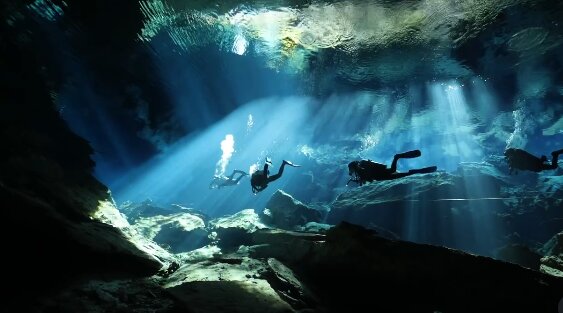
Cavern, two sinkholesTwo sinkholes a short walk apart, joined underwater — the eyes of the name. Snorkellers follow the bright half; certified divers take one of two named lines into the dark.
- How you get in1 departure goes in
- WhereNorth of Tulum off Highway 307, inside Parque Dos Ojos
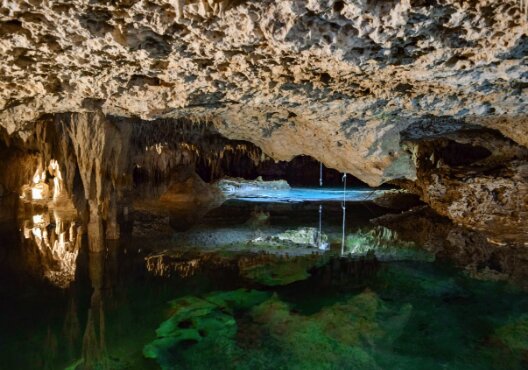
Fully enclosed cavernNo sky at all: a stairway drops into a chamber of stalactites where the only light is the one the cooperative installed, which is why it photographs the way it does.
- How you get in3 departures go in
- WhereInside Parque Dos Ojos, paid separately from the main gate
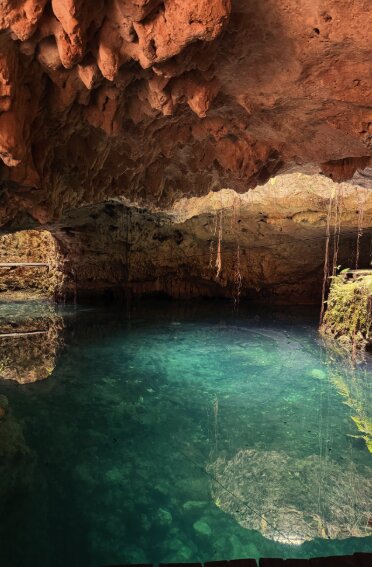
Open sinkhole with a roofThree holes in the roof read as a skull from above, which is where both names come from. You drop through the largest one, or take the ladder bolted beside it.
- How you get inReach it yourself
- WhereA short ride from Tulum town on the Cobá road
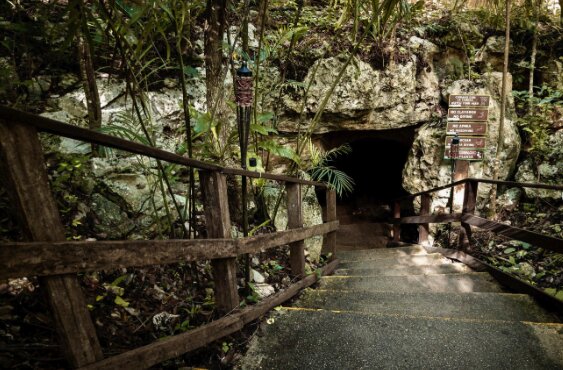
Open pond cenoteGreen with water lilies on top and glass-clear two metres down, over a drowned garden of branches and roots. The real name is Aktun Ha; the other one came from the roadside.
- How you get inReach it yourself
- WhereAbout 8 km from Tulum on the Cobá road, next to Zacil-Ha
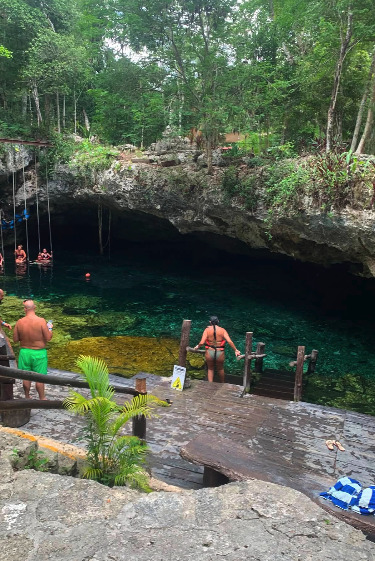
Open, pool-shapedPool-shaped, three metres deep more or less everywhere, with a zipline over the water and two built pools beside it. Nothing about it is an expedition, which is the point.
- How you get inReach it yourself
- WhereAbout 8.5 km from Tulum on the Cobá road (Highway 109)
Getting between them
Two of the seven sit on the same track eight kilometres out, and doing Car Wash and
Zacil-Ha as one morning is the easiest good decision on this coast. Gran Cenote is on the
way back. Casa Cenote is in the opposite direction and does not combine with any of them
in half a day.
The Parque Dos Ojos pair is the exception where a vehicle stops being optional: the
gate is on the highway and the water is a rough track further in. That is where the
private departures earn their money, and the planning page costs
both versions of the day out.
The ten more that tours name, and this list does not
Seventeen cenotes are named across the departures listed here. The seven above have
their own page because they carry enough verifiable fact to fill one. The rest —
Nohoch Nah Chich, El Sueño, Casa Tortuga, Yax-Muul, Zemway, Mariposa, Chen Ha, the
Sac Actun entrance near Chemuyil and two an operator names only as "our cenote" —
are real places you may well end up in.
They are covered one by one in the
cenote-by-cenote post, with which trip goes where. If a listing names a cenote and
you cannot find it here, that post is where it is.
Know which cenote you want?
Every departure below names the cenotes its own itinerary lists, so you can book the water rather than the wording. The fee column says what the fare covers before you get there.
Tulum Cenote Tours sets every departure side by side, and Tulum Cenote tours and tickets sorts the same
list by what you actually pay once the gate has taken its share.
