
Tulum Cenote Safety and Access
Cenotes are safer than they look and more particular than they sound. The water is clean, the operators are careful and the accidents that do happen almost all come from three things: going where daylight does not, provoking wildlife, and assuming sunscreen is fine.
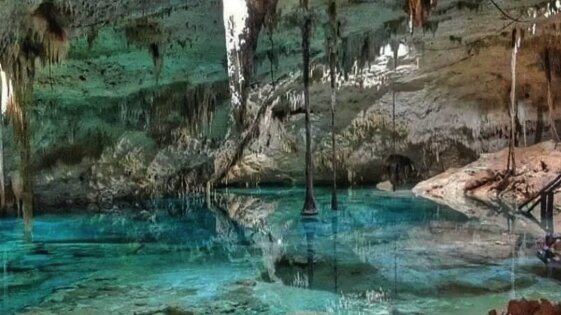
What "cavern" means, and where the line is
This is the single most important distinction on this coast and almost no marketing draws it. A cavern is the zone where daylight still reaches and a direct route to the surface exists. A cave is everything past that point.
Cavern swimming and cavern diving are open to ordinary visitors with a guide. Cave diving is a separate qualification, separate equipment and years of training, and no operator sells it to a tourist. If a listing offers to take you into a cave, it means a cavern — and the Dos Ojos page explains what sits beyond that line at this particular site.
| Daylight | Route to the surface | What you need | |
|---|---|---|---|
| Open cenote | Everywhere | Directly above you | Nothing. A jacket if you want one |
| Cavern | Reaches you, from an opening or lamps | Continuous, along a known route | A guide, a jacket, and calm in enclosed water |
| Cave | None | Only by retracing a guideline | A full cave certification. Not sold to visitors |
Where the line falls, and what each side asks of you. The distinction is a qualification rather than a feeling.
Life jackets and swimming ability
A life jacket is compulsory at most cenotes here and included at several. You will wear one in any cavern whether you want to or not, which is the correct policy in water with a roof over it.
You do not need to swim well for an open cenote. The edges are shallow, there is always something to hold, and the jacket does the rest. Say so when you book: one traveller describes a guide keeping a non-swimmer safe through every water activity of the day, which is a normal request rather than an awkward one.
The rule that changed in May 2026
The wider point is worth stating plainly. For years this encounter was sold as an attraction, and one listing captured here still names it. It is not one, it never really was, and the sensible position with any wild animal has not changed.
Crocodiles, honestly
Two of the seven cenotes here have them. Casa Cenote has its resident, and small ones are occasionally present at Cenote Car Wash. The cavern cenotes have none, because there is nothing for them to eat and nowhere to bask.
Morelet's crocodiles are not aggressive toward swimmers in open water. They keep to vegetated margins, they are far more interested in fish than in people, and the one recorded incident on this coast followed deliberate provocation. Keep your distance, do not feed anything, never corner one, and the risk is close to nothing.
Sunscreen is the one rule everybody breaks
Most cenotes ban all sunscreen, the biodegradable kind included, and one turtle-snorkel departure here bans it for the whole day. This is not fussiness: a cenote is groundwater moving slowly through limestone with no current to flush anything out, so what goes in stays.
Apply what you need at your hotel, hours before, and only where it will stay out of the water. Then cover up: a rash guard or a t-shirt is the answer, and it also solves the sunburn problem better than any lotion does. The packing page is built backwards from this one rule.
Rain, storms and what they do underground
Rain does not stop a cenote day. The water is groundwater and it does not care what the sky is doing, which is why a wet afternoon on this coast is a good afternoon to be under a limestone roof.
Two things do change. Heavy rain inland pushes sediment into the open cenotes and visibility drops for a day or two. And a jungle track turns to mud, which matters at the sites off the highway rather than the ones on tarmac. One paddleboard departure states plainly that it is weather-dependent and offers a full refund or another date; every other departure here runs.
Children in the water
Minimum ages on the bookable departures are real and specific: three set a floor of six years with a height minimum of 1.20 metres, one sets five, and four take infants only on an adult's lap. Those are the operators' own rules and they are not negotiable at the meeting point.
At a gate you walk up to there is no age limit, because there is nothing to have one about. Cenote Zacil-Ha is about three metres deep from edge to edge with two built pools beside it, which makes it the one place on this coast a four-year-old can spend a morning. Tulum Cenote tours and tickets lists what each departure will and will not take.