
What to Wear to a Tulum Cenote
One rule decides this entire list, and it is not the one people expect. You cannot wear sunscreen in the water at most cenotes near Tulum, biodegradable included. Everything below follows from that.
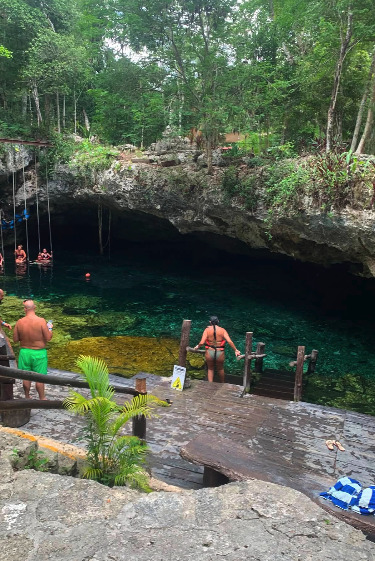
The sunscreen rule decides the whole list
A cenote is groundwater moving slowly through limestone. There is no current to flush anything out and no tide to dilute it, so oils and filters stay in the water and settle on the formations. That is why the ban exists, and why "reef safe" on a bottle does not get you past it.
Two of the captured listings tell travellers to apply anything they need at the hotel, beforehand, and only to skin that stays dry. One turtle-snorkel departure goes further and bans sunscreen of any kind for the whole day. Plan for the strictest version and you are never the person being asked to shower again.
The replacement is fabric. A long-sleeved rash guard covers the part of you that burns and does it better than any lotion, dries in twenty minutes and does not need reapplying after every swim. If you buy one thing for this trip, buy that. The safety page sets out the rest of the water rules.
On your feet
Limestone steps, wet, cut into rock. That is how you enter almost every cenote here, including the ones a tour drives you to. Flip-flops are the wrong answer and everybody brings them anyway.
Water shoes or sandals with a proper sole and a heel strap are the right one. They go in the water with you, they grip the steps on the way out, and at Cenote Calavera and Cenote Taak Bi Ha in particular the difference is not cosmetic.
What to swim in
Wear your swimwear under your clothes and you have solved the changing problem before it starts. Facilities range from proper changing rooms at the bigger sites to a bench and a hook at the roadside ones.
Over it: the rash guard, or a t-shirt you do not mind wet. Nothing white, because limestone dust and mineral water together are unkind to it. Leave jewellery at the hotel; sunscreen residue and lost rings are the two things cenote staff talk about.
Dry clothes, and where to put the wet ones
Bring a second set of everything and a bag for the first set. This is the item people forget and regret, because a two-hour drive back to Cancun in a wet swimsuit is a long two hours.
A dry bag is the single most useful thing nobody packs. It keeps your phone, your pesos and your dry clothes dry on a boat, in a colectivo and on a limestone step, and it costs almost nothing. A towel that packs small beats a hotel towel that does not.
Your phone in the water
Assume you cannot take it in. Three of the cenotes reached by departures listed here ban devices in the water outright, and at the Tulum archaeological site a GoPro, a tablet or a selfie stick attracts a fee at the booth. Drones are prohibited there entirely.
Where photography is allowed, a waterproof case earns its place and a floating strap earns it twice. At the lit cavern the chamber is artificially lit, which means the picture does not depend on the hour — but ask at the gate before you carry anything down the stairs.
The packing list, in one table
| Bring | Why | Where it matters most |
|---|---|---|
| Long-sleeved rash guard | Replaces the sunscreen you cannot wear, and does the job better | Every open cenote, and any day that includes Akumal |
| Water shoes with a heel strap | Wet limestone steps are how you enter almost all of them | Calavera, Taak Bi Ha, and anything down a cut stair |
| Dry bag | Keeps phone, pesos and dry clothes dry in a colectivo and on a boat | The most useful thing nobody packs |
| Pesos in small notes | Gate, locker and gear are three separate cash payments | Every roadside cenote, at half past eight in the morning |
| A mask that seals | Hire is a lottery and the underwater half is the point | Car Wash, where the whole visit is below the surface |
| Refillable water bottle | Single-use plastic is refused at the Tulum archaeological site | Any day that pairs a cenote with the ruins |
| A second set of clothes | A two-hour drive back to Cancun in a wet swimsuit is a long two hours | Every departure from Cancun or Playa del Carmen |
Built backwards from the sunscreen rule. Everything in the first column solves a problem a cenote actually creates, rather than a problem a beach does.
Nothing on that list is expensive and nothing on it is optional if you want the day to work properly. The rash guard and the dry bag are the two that change a trip; the planning page has what to book around them.
What to leave behind
Sunscreen — on at the hotel, bottle in the room. Single-use plastic bottles — refused at the Tulum archaeological site; bring a refillable one. Large notes — a cenote gate at half past eight has no change for them. Anything valuable — lockers exist at the larger sites and a bench is what you get at the smaller ones.
What to bring instead: pesos in small denominations, a mask if you own one that seals, and rather more water than the drive suggests. Tulum Cenote Tours lists which departures provide gear and which expect you to hire it at the gate.