Gran Cenote: Tulum Cenotes Tours, Turtles and the Cavern Swim
The most visited cenote near Tulum, and the one almost everybody swims first. Half of it lost its roof and half of it kept it, which is why a single stop here answers the question everything else on this coast asks of you.
Four kilometres out, and why that is the whole problem
Gran Cenote sits four to five kilometres north of Tulum town on the road to Cobá. That is close enough to reach on a bicycle in twenty minutes and close enough for every coach on this coast to include it, which are the two facts that define a visit here.
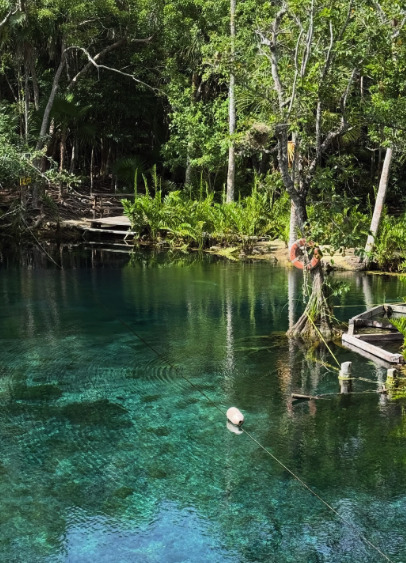
It is the most visited cenote in the Tulum area. At eight in the morning it is a quiet limestone amphitheatre with turtles in it. By eleven it is a queue for the stairs. Nothing about the place changes; only the number of people in it does, and that is entirely within your control.
Two cenotes in one: the open half and the roofed half
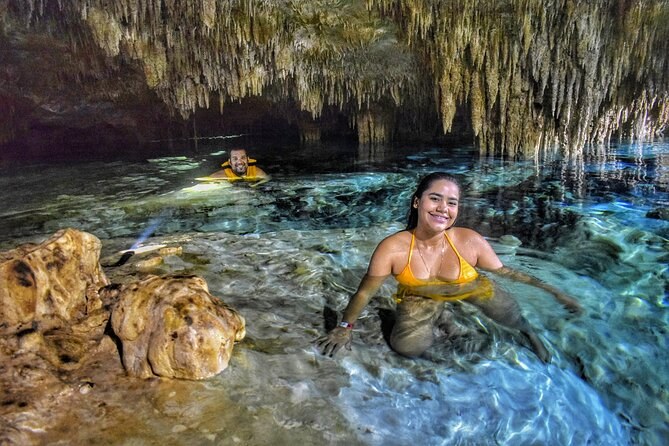
What makes this a good first cenote is that it is really two, joined by a channel you can swim. On one side the roof is gone: shallow water over pale limestone, warm at the edges, a wooden deck and steps in.
On the other the roof is intact, and you snorkel under an overhang hung with stalactites into a chamber where the light comes from behind you. Ten metres separates the two experiences. If you have never swum a cenote and do not know whether you want a roof over your head, this is the place that answers it — and the distinction is set out on the cenote comparison.
The turtles, and where they actually are
Small freshwater turtles live in the shallow open half, grazing the vegetation along the limestone shelf. They are genuinely easy to find in the first hour of the day, when the water has not been stirred and nobody is standing in it.
They are not the sea turtles almost every tour on this coast advertises. Those are at Akumal Bay, in the sea, and they are a separate stop on a separate kind of day. A listing offering turtles may mean either, and the itinerary is where you find out which.
Bats, and the thing nobody warns you about
There are bats under the roofed section, and they are the reason to look up rather than a reason to worry. They roost in the dark part of the overhang and come out at dusk, long after the gate has closed.
The thing that does catch people is the cold. The water sits around 73–75 °F all year, which after an hour walking the Cobá road in Yucatán heat feels considerably colder than the number suggests. Get in slowly and the first minute is the only difficult one.
A door into Sistema Sac Actun
Gran Cenote is one of the main entrances to Sistema Sac Actun, the flooded cave system that has been surveyed at 378.56 kilometres underwater. In January 2018 it absorbed the neighbouring Dos Ojos system, and for a while that made it the longest known underwater cave in the world; it now sits second, behind Ox Bel Ha.
You will not see any of that from the swimming area, and that is rather the point. The passage a certified cave diver follows out of here runs for kilometres in the dark. What you are floating in is the lit doorway of something very large, which the Dos Ojos page covers properly.
Snorkelling it, and diving it
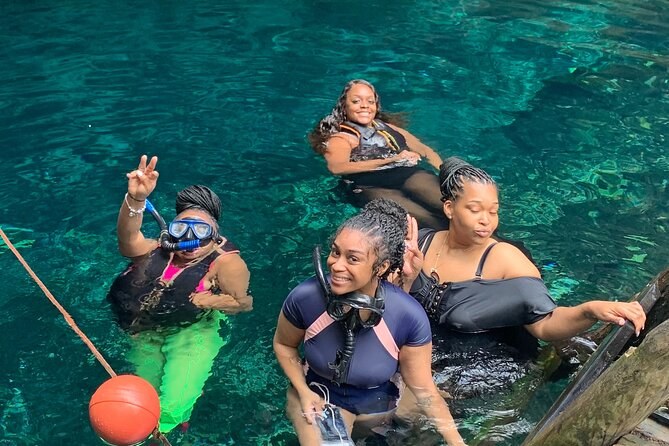
Snorkelling is what almost everyone does, and it is enough. A mask, a life jacket and forty minutes gets you both halves, the stalactites and the turtles. Gear is hired at the gate in cash or brought by whichever departure you are on.
Cavern diving here is a different product with a different guide and a certification requirement, run out of the dive shops in town rather than sold at the gate. No departure listed here includes it. What they do include is the surface swim, the gear and somebody who knows which half to start in.
Neither departure that comes here dives it, and for the roofed half neither needs to — a mask and forty minutes reach everything a snorkeller can see. If it is the enclosed water you are actually after, the private underground-river day spends three hours inside the Sac Actun passages with a guide and no ruins attached.
The hour that decides your visit
Arrive before nine. That is the entire trick, and every traveller who describes having this place to themselves in a review got there in the first hour.
The first coaches reach the Cobá road at about nine, and by eleven the car park is full. A private departure leaves when you ask it to, which is the real thing you are buying rather than a better cenote — and the private tour page costs that hour out honestly.
What it costs, and what a fare covers
Entry is cash, in pesos, at the gate, and no tariff is published for it. Snorkel gear and a locker are hired separately, also in cash. Bring more than you expect to need and bring it in small notes.
Both departures that come here include Gran Cenote admission in the fare, which their own listings state, so on either of them there is nothing to pay at this gate at all. What each one still collects for the archaeological site is a different question, and the fee tables answer it.
| Where | About 4–5 km north of Tulum on the Cobá road |
| Type | Half open to the sky, half under a limestone roof |
| Water | Around 73–75 °F all year |
| Known for | Freshwater turtles, bats, and a main entrance to Sac Actun |
| Gear | Snorkel and life jacket hired at the gate, or brought by your tour |
Gran Cenote at a glance. Depths and distances from published survey and guide sources; what a fare covers is read from each operator's own listing.
Compare Tulum Cenote tours and tickets
Know before you go
Arrive before nine
The gate opens at about eight and the first coaches reach the Cobá road at nine. That one hour is the difference between an amphitheatre and a queue.
Shower first, and mean it
There is a rinse before the water and it is not a formality — it is what keeps the water as clear as you came to see. Two minutes.
Bring your own mask if you own one
Hire is cash and the fit is a lottery. A mask that seals is the entire difference between seeing stalactites and seeing blur.
The cold is real for sixty seconds
Around 73–75 °F after an hour in Yucatán heat feels sharper than the number. Get in slowly rather than jumping and it passes.
Turtles are in the shallow half
Not the roofed one. Swim the open side first, slowly, before the water is stirred.
Small notes, in pesos
Gate, locker and gear are three separate cash payments and nobody has change for a large note at half past eight.
Questions about Gran Cenote
Is Gran Cenote worth it if it is busy?
Yes, if you go early, and much less so if you do not. The place itself does not change between eight and eleven; the number of people standing in the shallow half does. Nobody who arrived at half past eight has ever described it as crowded.
Can you see the turtles without snorkelling?
Sometimes, from the deck, in the first hour when the water is still. A mask makes it reliable rather than lucky. They graze the vegetation along the shallow limestone shelf on the open side.
How long do you need at Gran Cenote?
Forty minutes covers both halves properly, and ninety is a comfortable visit with time on the deck. The half-day departures here allow forty at each of three cenotes, which is enough to swim one and not enough to sit by it.
Is Gran Cenote the same as Grand Cenote?
Yes — the same place, spelled two ways, and both spellings appear on tour listings. One captured listing calls it Grand Cenote in its itinerary and Gran Cenote in its overview.
Address, hours and the map
Gran Cenote
Carretera Tulum-Coba km 4, 77796 Tulum, Quintana Roo, Mexico
Hours
Gates here open at about 8:00am and stop admitting swimmers in the mid-afternoon. Gran Cenote is run by the owners of the land it sits on, so those edges move and are not published anywhere central.
What it costs
Cash, in pesos, at the gate. No tariff is published for it and none is printed here — see what you pay and to whom for why, and for the departures whose fare covers it instead.
Getting here
Colectivos leave Tulum town for the Cobá road all morning and will stop at the gate; a bicycle does it in about twenty minutes on flat road. Parking is limestone gravel beside the entrance and it fills between ten and one.
Coordinates
20.2299°N, 87.436°W
Departures that go into Gran Cenote
Read from each listing's own itinerary, not from its title — these are the trips that actually stop at Gran Cenote.