
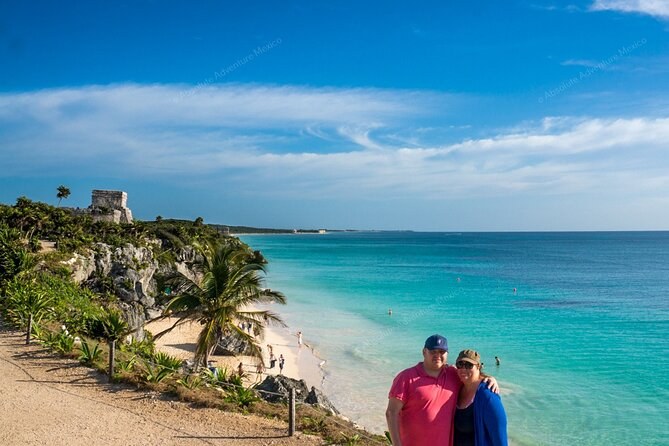
Cenote Dos Ojos: Tulum Cenotes Diving, Snorkelling and the Cave System
Two sinkholes, a short walk apart, joined underwater. Above the waterline it is a snorkel; below it, two named guidelines run into 82 kilometres of passage that stopped being its own cave system one January and became part of a much larger one.
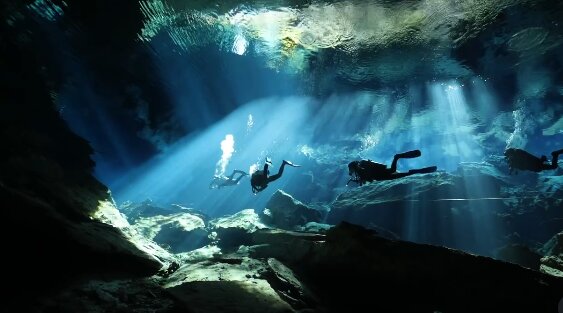
Two eyes, one collapse
Two sinkholes sit a short walk apart in the jungle north of Tulum, joined underwater by a span of flooded passage. Seen from the water they read as a pair of eyes, which is what the name says.
A snorkeller stays in the lit part where the two openings put daylight into the water. A certified cavern diver follows a guideline out of the light and back. Both are looking at the same rock; only the distance from the door changes.
The Barbie Line and the Bat Cave
Two named routes leave the sinkholes, and they are genuinely different products. The Barbie Line runs about 415 metres through wide, bright galleries and is the one most cavern dives here follow.
The Bat Cave line is harder, older-looking and hung with stalactites, and it carries an air dome where divers surface inside the cave with bats moving overhead. That is the dive people describe for years afterwards.
| Line | Roughly | What it is like | Who it is for |
|---|---|---|---|
| Barbie Line | 415 m | Wide, bright galleries with generous space overhead | A first cavern dive |
| Bat Cave | Shorter, harder | Older formations, tighter, with an air dome you surface into | A second or third cavern dive |
The two named cavern lines out of the sinkholes, from published dive-site descriptions. Neither is accessible without a certification.
Compare all Tulum Cenote Tours
Sistema Dos Ojos, and the January 2018 connection
The system these two sinkholes belong to was surveyed at 82 kilometres with 28 known cenote entrances. In January 2018 divers found a connection between it and neighbouring Sistema Sac Actun, and under the naming convention the smaller system becomes part of the larger.
Dos Ojos stopped being its own system that month and became part of something measuring 378.56 kilometres underwater. It is the reason Gran Cenote, this place and Taak Bi Ha are correctly described as three doors into one cave.
The Pit — 119 metres
Inside the same system is the deepest known cave passage in Quintana Roo: a shaft called The Pit, 119.1 metres deep, found in 1996.
Nothing bookable goes there and nothing sold to a visitor does. It is technical cave diving, and it is here as the measure of what you are floating on top of. The swimming area is the first few metres of a hole most of which nobody has seen.
Snorkelling it without a certification
You do not need to dive to be in this water. The lit span between the two sinkholes is snorkelled with a mask and a life jacket, and the formations overhead are the same formations the divers pass under.
It is colder and darker than an open cenote and there are stretches with nowhere to stand, so it asks more of a nervous swimmer than Cenote Zacil-Ha does. If enclosed water is not for you, that is worth knowing before the gate rather than at it.
What a cavern certification actually is
Cavern diving means staying inside the zone where daylight still reaches and a direct route to the surface exists. Cave diving means going beyond it. The line between them is not a matter of nerve; it is a different qualification, different equipment and a different training path.
An Open Water card gets you into a cavern with a guide who holds a full cave certification. It does not get you down the Barbie Line unaccompanied and it will never get you into The Pit. Any operator blurring that distinction is telling you something about the operator.
The gear, and what a shop provides
A cavern dive here is run out of the dive shops in Tulum town and Puerto Aventuras rather than sold at the park gate. Tanks, torches, reels and a guide come as one package, and so does the transfer up the track.
No departure listed here includes a cavern dive. What the one below includes is the surface swim, the gear for it and the park admission, which is the version the overwhelming majority of visitors actually want.
Nicte Ha, Dos Palmas and the others in the park
The park holds more than the two eyes. Nicte Ha is a shallow, lily-covered open cenote a short walk away; Dos Palmas is another again, with a temazcal on site. Each is charged separately, and each is a different swim.
The practical consequence is that two people can both say they went to Parque Dos Ojos and have swum different water. If it matters to you which, ask the operator to name the cenote rather than the park, and check the answer against the comparison.
Parque Dos Ojos is a park, not a cenote
This trips more people than any other fact on this coast. Parque Dos Ojos is an area of land containing several cenotes, and they are not one swim. Cenote Dos Ojos is the pair of sinkholes; Taak Bi Ha is a fully enclosed cavern under different management inside the same park; there are others again.
It is not the case that every Parque Dos Ojos trip swims Cenote Dos Ojos. Several departures enter the park and go to Taak Bi Ha instead, which is a different cenote and arguably the better one. Read the itinerary, not the title — the tour block below lists only what the listing's own itinerary names.
Reaching it, and what the gate covers
The park entrance is on Highway 307 north of Tulum and the water is a further drive inside on a rough limestone track. This is the one cenote on this list where the gate and the swim are not the same place, and where a vehicle stops being optional.
Entry is cash at the park gate, and Taak Bi Ha is charged separately again because a different cooperative runs it. One departure listed here includes both in the fare. The fee tables show what every other operator collects and when.
| Where | North of Tulum off Highway 307, inside Parque Dos Ojos |
| Type | Cavern — roofed passage with open sinkholes at each end |
| System | 82 km surveyed, 28 cenote entrances, joined to Sac Actun in 2018 |
| Known for | The Barbie Line, the Bat Cave air dome, and the 119 m Pit |
| Gear | Snorkel and life jacket, or full cavern kit with a guide |
Cenote Dos Ojos at a glance. Depths and distances from published survey and guide sources; what a fare covers is read from each operator's own listing.
The gate and the water are not the same place, which is the practical problem with driving yourself: you pay at the highway, then follow a limestone track in. The private day that starts at seven handles the track, the park bracelet and the second payment, and brings the gear with it.
Know before you go
Name the cenote, not the park
Parque Dos Ojos holds several. Ask an operator which one the itinerary actually enters before you book.
The gate and the water are not the same place
The entrance is on the highway and the cenotes are a rough track further in. Budget for the drive, or take a departure that handles it.
Snorkelling needs no certification
The lit span between the two sinkholes is a surface swim. Everything past daylight is a different qualification.
Two payments, not one
Taak Bi Ha inside the same park is charged separately by a different cooperative. Paying at the main gate does not cover it.
It is colder and darker than an open cenote
There are stretches with nowhere to stand. Wear the jacket and stay with the guide.
Cavern dives are booked in town
Not at the gate. The dive shops in Tulum and Puerto Aventuras run them with their own guides and gear.
Questions about Dos Ojos
Do you need to be a diver to visit Cenote Dos Ojos?
No. The lit span between the two sinkholes is snorkelled with a mask and a life jacket, and the formations overhead are the same ones divers pass beneath. Only the guideline routes need a certification.
What is the difference between Dos Ojos and Parque Dos Ojos?
One is a cenote and one is the land it sits on. The park contains several cenotes under different management, including Taak Bi Ha and Nicte Ha, each charged separately. A trip to the park is not automatically a trip to this cenote.
Which is better, the Barbie Line or the Bat Cave?
They answer different questions. The Barbie Line is wide, bright and about 415 metres, which makes it the usual first cavern dive. The Bat Cave is tighter and older-looking and carries an air dome you surface into, which is the one people remember.
Can you swim in The Pit?
No. The Pit is a 119-metre shaft inside the same system and it is technical cave diving, not something sold to visitors. It is worth knowing about as the measure of what the swimming area sits on top of.
Address, hours and the map
Cenote Dos Ojos
Parque Dos Ojos, Carretera Federal 307 km 244, 77762 Tulum, Quintana Roo, Mexico
Hours
Gates here open at about 8:00am and stop admitting swimmers in the mid-afternoon. Dos Ojos is run by the owners of the land it sits on, so those edges move and are not published anywhere central.
What it costs
Cash, in pesos, at the gate. No tariff is published for it and none is printed here — see what you pay and to whom for why, and for the departures whose fare covers it instead.
Getting here
The park entrance is on Highway 307 north of Tulum, and the cenotes are a further drive inside on a rough limestone track. This is the one where a car or a departure genuinely helps, because the gate and the water are not the same place.
Coordinates
20.3269°N, 87.3899°W
Departures that go into Cenote Dos Ojos
Read from each listing's own itinerary, not from its title — these are the trips that actually stop at Dos Ojos.