The Best Time to Visit the Tulum Cenotes
Three things move a cenote day and the forecast is not one of them: how hard it rained inland last week, whether sargassum has reached the coast, and what time the first van gets down the Cobá road. Here is the year against all three.
In this guide
- What actually changes with the season?
- The dry season, and its one drawback
- The wet season, and why it is underrated
- Month by month, at a glance
- Does rain ruin a cenote day?
- What is sargassum, and does it reach a cenote?
- Hurricane season, honestly
- When is the water warmest?
- What time of day should you go?
- Which month should you actually book?
- When are the cenotes actually empty?
- What should you book, and when?
- When is the water at its clearest?
- What changes if you only want the cavern cenotes?
What actually changes with the season?
Less than you would think, and not what you would expect. A cenote is groundwater. It does not warm up in August or cool down in January in any way you would notice, and rain above ground has no effect at all on a chamber with a roof over it.
What the season changes is everything around the water: how many people are in it, how clear it is after runoff inland, whether the coastal half of a combined day is worth doing, and what you pay for a bed. Those four are the whole argument, and the rest of this guide is about them.
The dry season, and its one drawback
December to April. Rain is rare, humidity is bearable, the sea is calm and sargassum is usually absent from the coast. The open cenotes are at their clearest because nothing has washed into them for months.
The drawback is everybody else. The Cobá-road cenotes fill by eleven and the small departures sell out days ahead. If you come in this window the nine o'clock rule stops being advice and becomes the plan.
The wet season, and why it is underrated
June to October. Afternoon rain most days, in short heavy bursts rather than grey all-day drizzle, and mornings that are frequently clear. Prices soften and the roadside cenotes empty out.
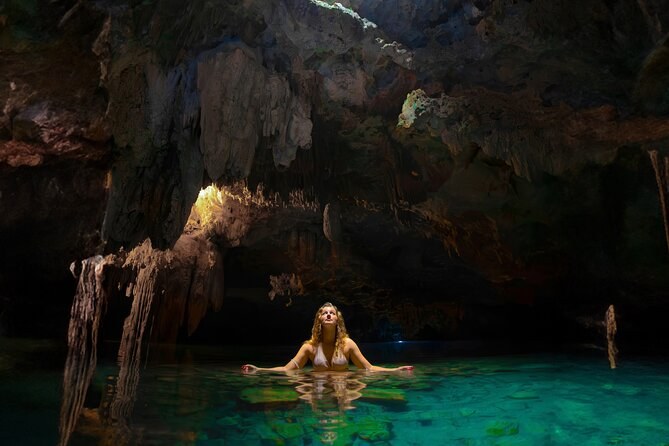
The water itself is unchanged. Being under a limestone roof in a warm downpour is one of the better experiences this coast offers, and the enclosed cavern does not know it is raining.
Month by month, at a glance
| Window | Rain | Crowds | Sargassum | Verdict |
|---|---|---|---|---|
| Dec–Feb | Rare | Peak | Usually absent | Best weather, worst crowds |
| Mar–Apr | Rare, building | Peak, then falling | First arrivals | Excellent, and full |
| May–Jun | Afternoon bursts | Falling | Often worst | Favour the Cobá road |
| Jul–Aug | Storms, wettest | Low | Variable | Emptiest cenotes, clear mornings |
| Sep–Oct | Peak storm risk, easing | Lowest | Clearing | Cenotes to yourself |
| Nov | Rare | Low | Clear | The month to book |
Rain and crowd patterns from seasonal norms on this coast; sargassum affects the coastal legs of a combined day and never the cenotes themselves.
The twelve-month version, one month at a time, is on the seasons page.
Does rain ruin a cenote day?
No, and this is the single most useful thing in this guide. The water you swim in fell as rain somewhere inland weeks or months ago and has been filtering through limestone ever since. Today's weather is irrelevant to it.
Two things do change. Heavy rain inland pushes sediment into the open cenotes and visibility drops for a day or two afterwards. And a jungle track turns to mud, which matters at the sites off the highway rather than the ones on tarmac.
One paddleboard departure states plainly that it is weather-dependent and offers a full refund or another date. Every other departure listed here runs.
What is sargassum, and does it reach a cenote?
A floating seaweed that arrives on this coast in mats, typically worst between April and August. It affects beaches and it affects sea snorkelling. It has no bearing whatsoever on a cenote, which is inland fresh water.
It belongs in a cenote guide anyway, because eleven of these departures include a coastal leg — the reef, or the turtles at Akumal. In a bad sargassum month those legs are the weak half of the day, and a pure cenote departure is the better booking.
Hurricane season, honestly
June to November, peaking in September. Most years pass without a named storm reaching this coast and most trips are unaffected. When one does come, the coast closes for two or three days and then reopens.
The protection you need is the one every departure here already gives you: full refund up to 24 hours before the start, in local time. Book flexibly, watch the forecast in the week before you travel, and do not pay a premium to insure a risk that is already covered.
When is the water warmest?
The open cenotes sit around 24 to 25 °C and move by a degree or two across the year. The enclosed ones hold 25 to 26 °C and do not move at all, because no sunlight has ever reached them.
What changes is not the water but you. In August, after an hour in the heat, a cenote feels cold and wonderful. In January on a breezy morning the same temperature takes a minute longer to get used to.
What time of day should you go?
Before nine, in every month, and it is the one variable here you fully control. The first coaches reach the Cobá road at about nine and the popular cenotes are full by eleven.
The exception is a cenote with a roof opening, where the light shaft is vertical around noon and gone by four. If the photograph is the point rather than the swim, that is the trade: an hour of crowd for an hour of light.
Which month should you actually book?
November, if your dates are flexible. The rain has stopped, the peak has not started, prices are still soft and the Cobá road is not yet full. It is the month regular visitors quietly recommend and few tourists choose.
February or March for the clearest water and the most reliable weather, if you can accept the crowds and book the small departures well ahead. September or October if you want cenotes to yourself and can accept the risk of a storm week.
When are the cenotes actually empty?
September and October, and it is not close. Storm risk is at its peak, many small operators reduce their schedule, and you can have water to yourself in October that is standing room in February at the same price.
Within any month, the answer is the first hour. The gap between an empty cenote and a full one is about ninety minutes, every month of the year, and no seasonal choice buys you as much as an early alarm does.
The three cenotes on this coast the coaches ignore entirely are Car Wash, Zacil-Ha and Calavera, because there is nothing for an operator to sell at any of them. They are quiet in February as well as in September.
What should you book, and when?
December to April: book several days ahead, and book the small departures first. Two of them cap at five and ten travellers and those go before anything else. Everything refunds in full at 24 hours, so early costs nothing.
May to August: a day or two ahead is plenty. Favour a pure cenote departure over one with a coastal leg, because sargassum is at its worst and the reef half is the part that suffers.
September to November: book late and book flexibly. Watch the forecast in the week before you travel and use the 24-hour window if a storm arrives. This is the stretch where turning up on the day usually works.
Whatever the month, the enclosed cenotes hold. If your dates are fixed and the weather turns, an artificially lit chamber is the booking that cannot be rained off. Tulum Cenote tours and tickets has what is running.
When is the water at its clearest?
February and March in the open cenotes, and always in the enclosed ones. That difference is structural rather than seasonal, and it is worth understanding before you plan around a forecast.
An open cenote takes surface runoff. Heavy rain inland pushes sediment into it and visibility drops for a day or two afterwards, which is why the dry season gives you the sharpest water: nothing has washed in for months. A sealed chamber takes nothing at all, so Cenote Taak Bi Ha in August looks exactly like Cenote Taak Bi Ha in February.
The practical consequence is a sequencing rule. If you are here for several days in the wet season, do the open cenotes on the mornings after a dry night and keep an enclosed one for the day after a storm. That single decision is worth more than picking a month.
The coastal legs follow the same logic in reverse. Sea snorkelling at Akumal depends on a calm bay and an absence of sargassum, neither of which you can influence and both of which you can check the morning of. If the beach looks wrong, swap that day for a cenote and keep the coast for later in the week — the departures that pair the two are the ones where the weather can genuinely cost you half a day.
What changes if you only want the cavern cenotes?
Almost nothing, which makes them the reliable half of any itinerary. Cenote Taak Bi Ha is sealed and artificially lit, so the month, the hour and the weather all stop mattering.
That is worth planning around. Put the open cenotes and the coastal legs in your best-weather days and keep an enclosed cenote in reserve for the afternoon a storm arrives. It is the one thing on this coast that cannot be rained off.
Frequently asked questions
What is the best month to visit Tulum's cenotes?
November, for the best overall trade — the rain has stopped, the peak has not started and the road is not yet full. February and March give you the clearest water if you can accept the crowds.
Can you visit cenotes in the rainy season?
Yes, and it is underrated. Rain arrives in short afternoon bursts, mornings are frequently clear, prices soften and the cenotes empty out. The water is groundwater and does not care what the sky is doing.
Does sargassum affect the cenotes?
Not at all — a cenote is inland fresh water. It affects the coastal legs of combined days, which is why a pure cenote departure is the better booking between April and August.
How cold are the cenotes?
Around 24 to 25 °C in the open ones and a steady 25 to 26 °C in the enclosed ones, which never change. Nobody needs a wetsuit to swim; divers staying down for an hour think differently.
Tulum Cenote Tours sets every departure against the others on length, group cap and what the fare covers.
Departures that fit this guide
Chosen for what this guide argues, not for what sells.