A Tulum Cenote Day, Hour by Hour
A cenote takes forty minutes to swim and the driving between them takes longer than the swimming. Here is the same day run two ways — self-driven down the Cobá road and guided — hour by hour, with the places each one fails.
In this guide
- What does a cenote day actually look like?
- The self-driven day, hour by hour
- The guided day, hour by hour
- The two days side by side
- Why does the first hour matter so much?
- Where the self-driven day goes wrong
- Where the guided day goes wrong
- Building a half-day instead
- Building a two-cenote afternoon
- What to eat, and when
- How does the day change with children?
- What actually goes wrong on a cenote day?
- What do you actually carry through a cenote day?
- The three-day version
What does a cenote day actually look like?
Shorter than you think and earlier than you want. A cenote takes forty minutes to swim properly. The driving between them takes longer than the swimming, and the single variable that decides the whole day is what time you reach the first one.
What follows is the same day run two ways, hour by hour, built from the start times and per-stop durations the operators publish on their own listings. Both versions work. They cost very different amounts and they fail in different places.
The self-driven day, hour by hour
07:30 — eat in Tulum town. Nothing at a cenote sells breakfast and several sell nothing at all.
08:15 — flag a colectivo on Avenida Tulum heading for Cobá. Tell the driver which cenote and pay a few pesos.
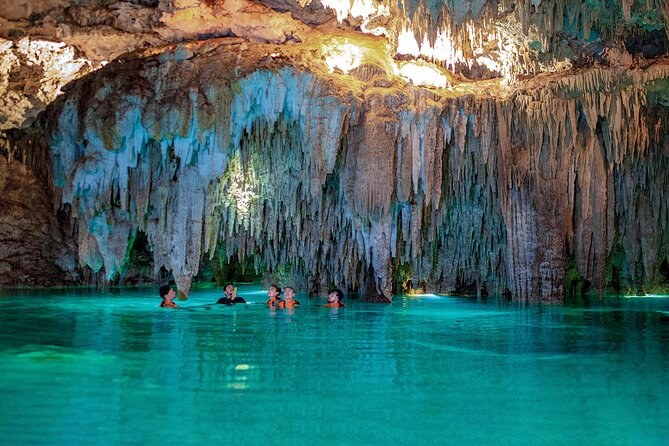
08:45 — Cenote Calavera, a kilometre and a half out, and you are probably the first person in it. An hour is the visit: it is one pool with one way in.
10:00 — Gran Cenote, ahead of the coaches. Both halves, the turtles, forty minutes.
11:15 — on to Cenote Car Wash at eight kilometres, with Zacil-Ha next door if anybody still has energy.
13:30 — back in town for lunch, having swum three or four cenotes for the price of the gates.
The guided day, hour by hour
08:45 — meet at an office in Tulum town, or be collected from your hotel between seven and nine depending where you are staying. The pickup window is the part nobody enjoys.
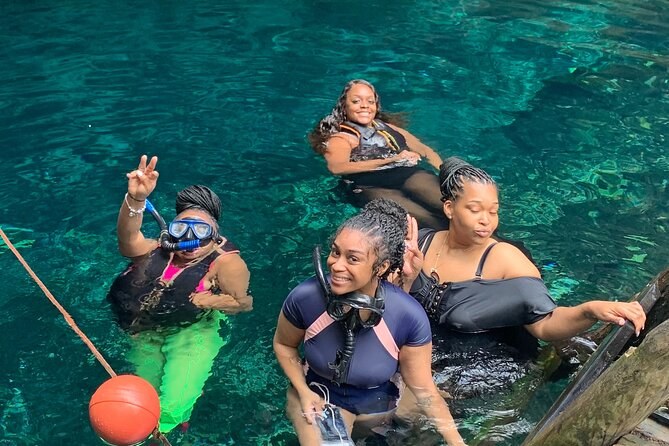
09:30 — first cenote, forty minutes, gear provided and the gate already paid.
10:30 — second cenote, and this is where a guided day earns its money: somewhere off the highway you could not have reached, up a track, behind a second payment.
11:45 — third cenote, or a lagoon, or the coast, depending which departure you took.
13:00 — back at the meeting point on the half-day runs. The long combined days go on until five, six or later, and the driving is the reason.
The two days side by side
| Time | Self-driven | Guided half-day |
|---|---|---|
| 07:30 | Wake, eat in town | Wake, eat in town |
| 08:15 | Colectivo from Avenida Tulum | Hotel pickup, or walk to the meeting point |
| 08:45 | At Cenote Calavera, first in | Depart Tulum town |
| 09:30 | Colectivo up the road | At the first cenote |
| 10:00 | At Gran Cenote, ahead of the coaches | Second cenote |
| 11:15 | Colectivo on to Car Wash | Third cenote |
| 12:30 | Zacil-Ha, or back to town | Back at the meeting point |
| 13:30 | Lunch in Tulum | Lunch in Tulum |
| Cost | Gate fees, gear hire and colectivo fares, all cash | The fare, and on the best of them nothing else |
The self-driven column is built from colectivo timings and the distances on the Cobá road; the guided column from the start times and per-stop durations the listings publish.
Why does the first hour matter so much?
Because the coaches reach the Cobá road at about nine and the popular cenotes are full by eleven. That is the entire crowd dynamic on this coast, and it is the same in February and in September.
Everything else you can control is downstream of it. Arriving at half past eight gives you a cenote to yourself; arriving at half past ten gives you a queue for the same stairs at the same price. No amount of money buys the difference back later in the day.
Where the self-driven day goes wrong
Cash. Three gates, gear hire and lockers are five separate cash payments in pesos, and none of them is a published figure. Bring far more small notes than the arithmetic suggests.
The last colectivo. They thin out sharply in the late afternoon and eight and a half kilometres is a long walk. Start back earlier than feels necessary.
The cavern cenotes. You cannot reach them. Parque Dos Ojos is off the highway up a limestone track, and no colectivo goes down it.
Where the guided day goes wrong
The pickup window. A Cancun collection means two hours of driving before anything happens, which is how an eight-hour listing becomes a twelve-hour day. Staying in Tulum town removes most of it.
Forty minutes per stop. That is a survey rather than a swim. If you want to spend a morning in one cenote, no shared departure sells that.
The cash on the day. Nine of the departures collect something on the morning and the amounts are not close to each other. The fee tables have all of them.
Building a half-day instead
The strongest version of a cenote day on this coast is four hours long. Three cenotes, no archaeological site, meet in town at quarter to nine, back by early afternoon with the rest of the day intact.
It is also the only format that teaches you anything, because three cenotes in a morning is what tells you which kind you prefer. The half-day page compares the six that run to that length.
Building a two-cenote afternoon
If you have missed the morning entirely, the answer is an enclosed cenote. Cenote Taak Bi Ha is lit and sealed, so three o'clock looks exactly like nine o'clock and the crowd is the only variable.
Pair it with Casa Cenote on the coast road, where the light comes into the mangrove sideways in the late afternoon and is better than it is at noon. Two cenotes, no queue, and you have salvaged the day.
What to eat, and when
Eat before you go. The roadside cenotes have no restaurant and the ones that do run a small kitchen with a queue at one o'clock. Several departures include lunch and it is one of the better reasons to take one.
Carry water and something in a bag. There is often no shade to eat in, which is a surprisingly common way for a good morning to end early with a hungry child. The packing page has the rest of it.
How does the day change with children?
It gets shorter and it starts in a different place. Three cenotes in a morning is a lot of getting in and out of a vehicle for anybody under about eight, and the second one is usually where the enthusiasm goes.
The version that works is two stops with a long second one. Cenote Car Wash at nine while everyone is fresh, then Cenote Zacil-Ha five hundred metres up the road for as long as they want it. Three metres deep, a zipline, two built pools and a shallow end.
If you would rather be driven, three of these departures set a minimum age of six and a height floor of 1.20 metres, one sets five, and four take infants only on a lap. Those are applied at the meeting point rather than negotiated there.
What actually goes wrong on a cenote day?
The pickup. Almost every complaint about these departures is about collection rather than water: a window that moved, a location changed the night before, a driver who did not wait. Confirm your pickup with the operator the evening before and be in the lobby fifteen minutes early.
The length. An eight-hour listing collected from Cancun runs to twelve, and the driving is the variable rather than the stops. Being collected in Tulum removes most of it, which is the strongest argument for basing yourself there.
The cash. Arriving at a gate with two large notes and no change is a genuinely common way to lose twenty minutes. Draw pesos in town, in small denominations, before you set off.
The sunscreen. Applied at the cenote rather than at the hotel, it means a second shower and an awkward conversation. The packing page starts from that rule.
What do you actually carry through a cenote day?
Less than you would pack for a beach and more cash than you would expect. Swimwear under your clothes solves the changing problem before it starts, because facilities run from proper changing rooms at the bigger cenotes to a bench and a hook at the roadside ones.
A dry bag is the item that makes the difference on a self-driven day: it keeps your phone, your pesos and your dry clothes dry in a colectivo, at a gate and on a limestone step. Water shoes with a heel strap matter more than anything else you wear, because wet cut limestone is how you enter almost every one of them.
And leave the sunscreen at your hotel. Most cenotes here ban all of it, biodegradable included, which is the one rule that reshapes an entire packing list — the packing page works from it backwards.
The three-day version
Day one: the Cobá road under your own steam — Calavera early, Gran Cenote at ten, Car Wash and Zacil-Ha after. Cash, a bicycle or a colectivo, no booking.
Day two: a guided departure to the cavern cenotes off the highway. This is the day that needs somebody else's vehicle and somebody else paying two gates.
Day three: the coast. Turtles at Akumal in the morning while the bay is calm, Casa Cenote in the afternoon. The planning page costs all three.
Frequently asked questions
How many cenotes can you visit in a day?
Three comfortably, four if they are all on the Cobá road and you start at half past eight. Two is the honest sweet spot if you want to swim rather than survey. The half-day departures do three by allowing forty minutes at each.
What time do cenotes open?
Most gates open at about eight and stop admitting swimmers in the mid-afternoon. Because each one is run by whoever owns the land, those edges move and are not published anywhere central.
Is it worth going in the afternoon?
For an enclosed cenote, yes — the light is artificial or absent, so the hour changes nothing but the crowd. For anything with a roof opening, no: the shaft is vertical around noon and gone by four.
Should I book or just turn up?
Turn up at the Cobá-road cenotes, which take cash and need no plan. Book if you want the cavern cenotes off the highway, because those need a vehicle, a track and two gate payments.
Tulum Cenote Tours sets every departure against the others on length, group cap and what the fare covers.
Departures that fit this guide
Chosen for what this guide argues, not for what sells.