
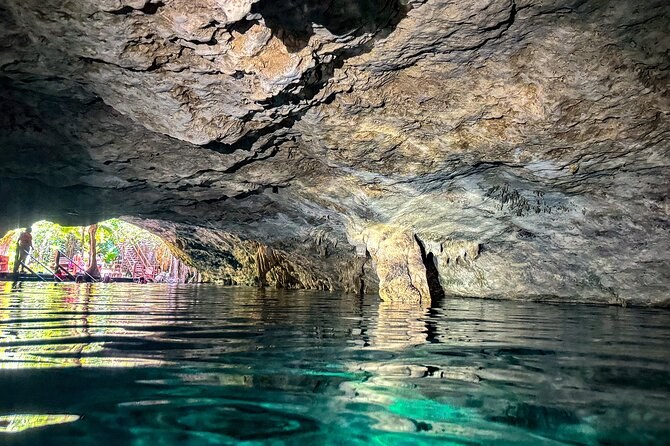
What a Tulum Cenote Tour Costs, All In
Fares run from about $35 to about $299, and then somewhere between nothing and $60 more lands once you arrive. Seven operators quote seven different mandatory-fee figures for days that overlap heavily, and on one product the surcharge is larger than the fare.
In this guide
- What does a cenote tour actually cost?
- Every departure, fare and what lands after
- Why does the surcharge not track the fare?
- The nine that collect nothing
- The archaeological site, and the seven different figures
- What does a cenote gate cost, and why is there no number here?
- Gear, lockers and the small cash
- Tipping
- Is a private departure worth the difference?
- How to work out your real total in two minutes
- What are the costs nobody mentions?
- What is the cheapest honest way to swim a cenote?
- Where the money actually goes
What does a cenote tour actually cost?
Between about $35 and about $299 per person for the fare, and then somewhere between nothing and $60 more once you arrive. The second number is the one nobody prints, and on this coast it is the number that decides which booking was the cheap one.
Everything below comes from the operators' own listings. Fares are what you pay up front. The last column is what that same operator says it collects on the day, in that operator's own words.
Every departure, fare and what lands after
| Tour | Fare | Length | Collected on the day |
|---|---|---|---|
| Tulum & Coba with Cenote, Cave Exploration, Lunch & | From $35 | 12 hours | US$44 per person |
| Tulum Ruins and Cenote Guided Tour from Cancun | From $69 | 8 to 9 hours | US$30 per person |
| Magical Cenote and Paradise Lagoon Snorkeling Advent | From $79 | 3 hours 30 minutes | — |
| Tulum Day Trip Mayan Ruins and Cenote Swim with Lunc | From $79 | 8 hours | MX$750 per person |
| Tulum & Cenote Adventure | From $109 | 4 hours 30 minutes | — |
| Tulum, Reef Snorkeling, Cenote & Mayan Ceremony | From $109 | 8 to 10 hours | US$25 + US$35 per person |
| Tulum Guided Tour, Magical Cenote, Lagoon Snorkeling | From $119 | 6 hours 30 minutes | US$15 per person |
| Cenote Paddleboarding and Snorkeling in Tulum | From $125 | 4 hours | Nothing |
| Tulum Ruins, Turtles in Akumal and Cenote tour | From $129 | 8 hours | — |
| Cenote Triple Adventure Tour in Tulum | From $129 | 4 hours | Nothing |
| Full Day Tulum Ruins Tour Cenote and Swimming with S | From $132 | 9 hours | US$25 per person |
| Tulum, Snorkeling with Sea Turtles, Cenote and Beach | From $149 | 6 hours 30 minutes | — |
| Private Tulum Experience & Cenote | From $149 | 6 hours | US$15 per person |
| Private Tour The Best Cenotes in Tulum Riviera Maya | From $199 | 6 hours | — |
| Private Guided Cenotes and Underground River Explora | From $199 | 5 hours | Nothing |
| Tulum Ruins & Swim in a Cenote – VIP Private Experie | From $204 | 4 to 5 hours | Nothing |
| Tulum Private Tour: Mayan Ruins, Cenote and Native G | From $206 | 4 to 6 hours | Nothing |
| All-Inclusive! Tulum Ruins, Tequila Tasting + Swim i | From $211 | 6 to 7 hours | Nothing |
| Private Tulum & Cenotes tour | From $250 | 6 to 8 hours | Nothing |
| Private Tour to Tulum, Cenote and Swimming with Turt | From $297 | 5 to 7 hours | Nothing |
| Tulum Ruins & Cenote guided private tour from Tulum | From $299 | 4 hours 30 minutes | Nothing |
Fares and stated charges from each product's own listing, captured 27 August 2026. An em dash means no charge is named for the day and does not itemise its inclusions further.
Why does the surcharge not track the fare?
Because the fare is a commercial decision and the surcharge is a pass-through. An operator that prices at $35 and collects $44 at the archaeological site is advertising against operators who bundle the same fee and price at $119.
Both are honest. Both state the charge on the listing. But a price-sorted grid puts the first one at the top, which is exactly why reading the fare alone will point you at the wrong tour more often than not.
The nine that collect nothing
Nine of these departures cover every gate fee inside the fare. Nothing is collected on the morning, nothing needs to be in cash, and the total you pay is the number on the booking page.
That is the only version of a cenote day whose cost you can know before you leave home, and it is worth a premium on a coast where nobody publishes a gate price. Seven of the nine are private departures; two are shared.
The archaeological site, and the seven different figures
Admission to the Tulum ruins is not one ticket. It is an archaeological zone fee, a protected-area bracelet and Parque del Jaguar access, collected at separate booths, and every operator bundles a different subset.
The operators quote MX$750 itemised three ways, US$44 by card only, US$25, US$15 and US$10 — seven different totals for days that overlap heavily. That is the fact, and it is why the fee page prints the operator table rather than a single number.
What does a cenote gate cost, and why is there no number here?
Cash, in pesos, at a price the owners set. Every cenote near Tulum is on private land held by an ejido, a Maya cooperative or a family. There is no ministry setting a tariff and no authority publishing one.
Third-party figures for a single cenote currently range across a factor of three, all written in good faith and none of them current. A gate price copied onto a travel page and left to age is worse than no price, so this site prints none anywhere.
What it prints instead is the thing that is sourced: which departures cover the gate, and what the ones that do not will ask you for.
Gear, lockers and the small cash
Beyond the gate there are three more cash payments and none is large: a locker, a life jacket and a snorkel set. Two of these departures include a locker in the fare and say so.
Bring small notes. A cenote gate at half past eight has no change for a large one, and the machine that takes cards is either absent or unreliable. Draw pesos in town before you set off.
Tipping
Normal, expected and never included — almost every listing puts gratuities in its not-included column. Something for the guide and something for the driver, in pesos, at the end of the day.
On a coast where three operators visit the same three cenotes, the guide is the product. It is worth budgeting for properly rather than scraping together whatever is left in your pocket at five o'clock.
Is a private departure worth the difference?
It buys a start time, not a better cenote, and that is the honest framing. A private vehicle leaves when you ask, which means the water at eight rather than eleven — and the difference between an empty cenote and a full one is about ninety minutes.
The arithmetic changes with group size. At two people it is an expensive way to buy an hour. At four or more it stops being a premium and starts being a sensible way to split a vehicle. The private tour page works through the eight.
How to work out your real total in two minutes
- Take the fare. It is per person and it is what you pay up front.
- Read the not-included column. Every charge the operator collects is listed there, with the amount.
- Add gratuities. Never included, always expected.
- Add nothing for the gates where the cenote admission is named as included — and add an unknown where it is not.
Do that for two products and the ranking usually inverts. It is two minutes of work and it is the single most valuable thing you can do before booking anything on this coast.
What are the costs nobody mentions?
The pickup surcharge. Four of these listings charge extra to collect you from outside their core area — between $10 and $45 per person by zone on one of them, $20 to $25 on others. If you are staying outside Tulum or Playa del Carmen, read that line before the fare.
The minimum booking. Three departures require at least two travellers, and one requires four for a Cancun collection. A solo booking on those is held rather than confirmed.
Photographs. Several operators sell souvenir photos and every one of them puts it in the not-included column. At the archaeological site a GoPro or a selfie stick attracts its own fee at the booth.
Lunch. Included on eleven of these and an add-on on others — $15 on one of the half-days. Where a title says lunch and the inclusions do not, the inclusions are what you are buying.
What is the cheapest honest way to swim a cenote?
A colectivo and a gate fee. Four of the seven cenotes with a page here are on one flat road out of Tulum town, they take cash, and no operator sells a ride to any of them because there is nothing to sell.
The cheapest bookable version is a shared half-day, and the cheapest fare on the whole coast is a twelve-hour combination day whose surcharge is larger than its fare. Those two facts sit oddly together and they are both true, which is the entire argument of this guide.
If cost is the constraint, do the Cobá road yourself and spend the money you saved on one guided departure to the cavern cenotes you cannot reach. The channel guide sets the four ways against each other, and the planning page turns it into three days.
Where the money actually goes
The gate fee goes to the community that owns the land, maintains the stairs and runs the showers. That is why it is cash and why nobody publishes it: it is a local decision made locally, and it changes when the community decides it should.
The archaeological fees go to national bodies and to the park. The fare goes to the operator and the platform. Knowing which is which makes the whole structure legible, and it makes the surcharge feel less like a trick and more like what it is — somebody else's money being passed through.
Frequently asked questions
How much is a cenote tour in Tulum?
Fares run from about $35 to about $299 per person, mostly according to how long the day is and how many people are in the vehicle. What matters more is what lands on top: between nothing and about $60, depending entirely on the operator.
Do I need cash for a cenote tour?
Almost always, in pesos, in small notes. Gate fees, gear hire and lockers are cash everywhere. The exception runs the other way: the Cobá combination day takes its archaeological admission by card only.
Which cenote tour is the best value?
Not the one with the lowest fare, on this coast. Work out the real total for two products before you compare them, because the cheapest headline here carries the largest single surcharge on top of it.
Are cenote entrance fees expensive?
They are modest individually and they add up across three cenotes, gear and a locker. The problem is not the amount, it is that no figure is published and you cannot budget for it — which is what a fare that covers the gate is really selling.
Tulum Cenote Tours sets every departure against the others on length, group cap and what the fare covers.
Departures that fit this guide
Chosen for what this guide argues, not for what sells.
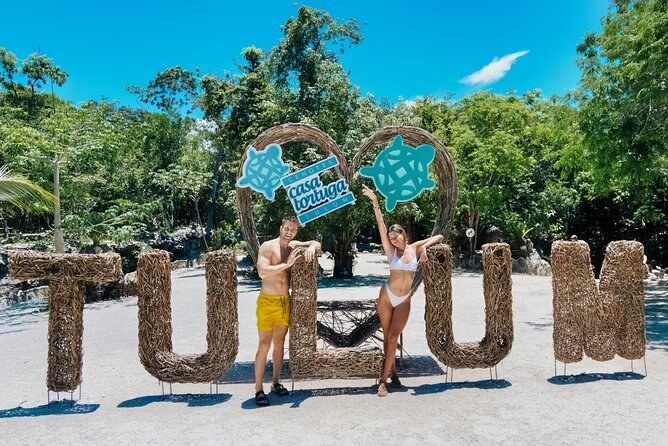
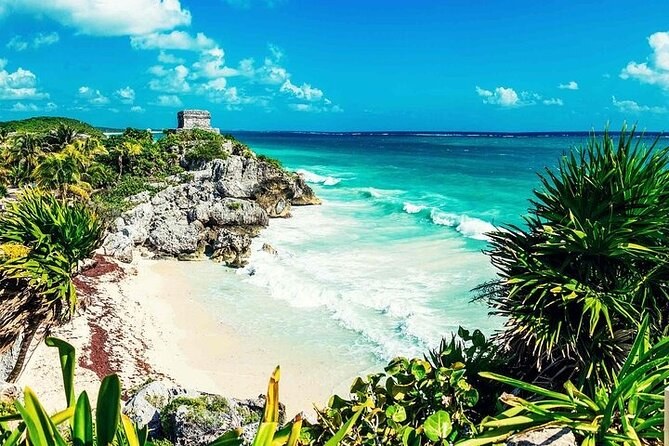
Full Day Tulum Ruins Tour Cenote and Swimming with Sea Turtles
From $132 per person
Check Availability