The real tension, and it is not what you think
Everybody frames this as ruins versus water, culture versus swimming. That is not the decision. Both are worth a morning and most people have time for both somewhere in a week.
The decision is financial and nobody prints it. Cenote gates take cash at prices nobody publishes; the archaeological site takes a stack of separate fees that seven different operators quote seven different ways. Bundling the two means bundling the uncertainty, and the fare on the booking page tells you nothing about it.
Three days, priced properly
| The day | Fare | Collected on the day | Length | What you see | Real total |
|---|---|---|---|---|---|
| Cenotes only | From $129 | Nothing | 4 hours | Three cenotes | From $129 |
| Ruins plus a cenote, mid-range | From $119 | US$15 per person | 6.5 hours | Ruins, lagoon, cenote, lunch | about US$134 a head |
| Ruins plus a cenote, budget | From $35 | US$44 card only, plus US$10 locker | 12 hours | Ruins, Cobá, cenote, lunch | about US$89 a head |
Fares from each listing and charges those same listings say they collect on the day, captured 27 August 2026. The last column is the total you can actually know before you travel.
Read the last column against the second. The budget combination day has the lowest fare on this coast and the second-highest real total, and it runs twelve hours with pickups from five in the morning to get there.
The case for the combination day
The Tulum archaeological site is the only Maya city built facing the Caribbean, on a cliff above a beach, and standing in it is not something a cenote replaces. If you are here once, you will regret skipping it more than you will regret the surcharge.
The combination days also solve a real logistics problem. The site and the cavern cenotes are in different directions from town, and doing both yourself means two trips. Eleven operators have already worked out the order — ruins first at opening, water afterwards — and it is the right one.
The case for the pure cenote day
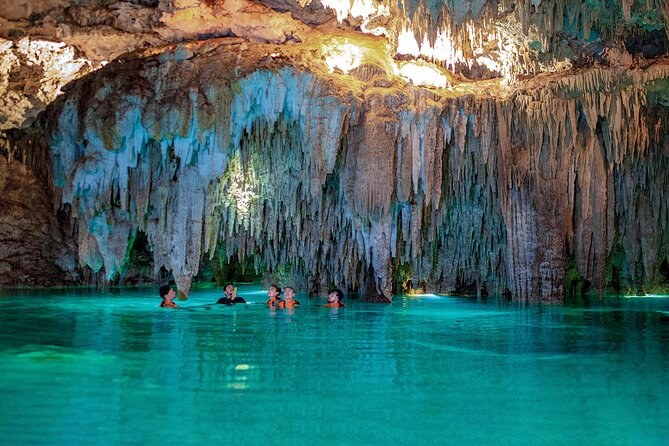
Four hours, no archaeological surcharge, no coach, and three cenotes rather than one. It leaves from Tulum town at quarter to nine rather than collecting from resorts, which is why it reaches the water before the coaches do.
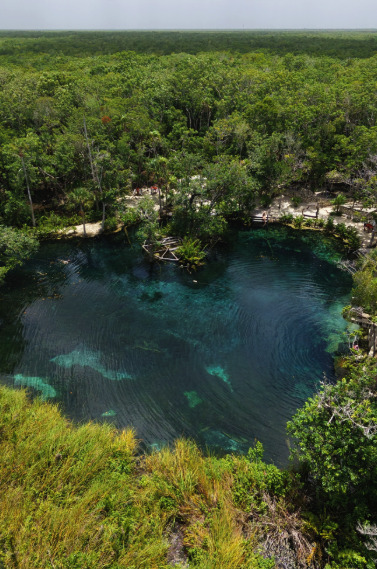
It is also the only format that teaches you anything. One cenote tells you whether you liked that cenote; three tell you whether you prefer a roof or the sky, which is the question the comparison page exists to answer. And the total is the fare, exactly.
Doing both, in the right order
- Day one: the pure cenote half-day, back by early afternoon.
- Day two: the archaeological site under your own steam, early, with a colectivo and a refillable bottle.
- Or: the mid-range combination day, which does both for one US$15 charge and adds a lagoon and lunch.
The version to avoid is the twelve-hour budget day booked on the strength of its fare. It is a good trip for the right traveller and a long one for everybody else, and the reviews page carries both verdicts.
If you are building the two-day version yourself, the order that works is water first. Do the pure cenote morning while you are still adjusting to the heat, then the archaeological site the next day at opening, when you know how the colectivos run and how early is early enough. The planning page costs both days out, and the packing page covers the one rule that decides what you carry into either of them.
One last thing worth saying plainly: the archaeological site and the cenotes are not competing for the same slot in your week. The site takes two hours and rewards an early start. A cenote takes forty minutes and rewards the same. You can do both before lunch on the same morning if you are staying in Tulum town, and the cenote comparison tells you which one is close enough to make that work.
The verdict, by traveller
One day on this coast: the mid-range combination. Ruins, lagoon, cenote and lunch, capped at sixteen travellers, and only US$15 collected on the day.
Cenotes are the point: the pure three-cenote half day, and the ruins on your own another morning. Budget above all: do the sum first — the cheap fare stops being cheap once US$54 lands on it, and the fee tables show every version.
Questions this raises
Is the Tulum archaeological site worth it?
It is the only Maya city built facing the Caribbean, on a cliff above a beach, and standing in it is not something a cenote replaces. If you are here once you will regret skipping it more than you will regret the surcharge.
Why do the operators charge different amounts for the same site?
Because admission is not one ticket. It is an archaeological zone fee, a protected-area bracelet and Parque del Jaguar access, collected separately, and each operator bundles a different subset. Seven of them quote seven different totals.
Can I do the ruins myself and book only a cenote day?
Yes, and it is often the cheaper route. A colectivo reaches the site from Tulum town for a few pesos, and the pure cenote half-day collects nothing on the morning. You pay the site's fees once, directly.
Which order should I do them in?
Ruins first, at opening, then water. The archaeological site is stone paths in full sun with almost no shade, and eight o'clock is a materially different morning from eleven. Every operator that bundles both does it this way.
Do the sum before you book, because on this coast the cheapest fare and the cheapest day are almost never the same product. Tulum Cenote Tours sets every departure against the others, and Tulum Cenote tours and tickets sorts them by what the fare covers. private Tulum Cenote tour sorts the same list by what you actually pay.
Departures that fit this question
Chosen for what this post covers rather than for what sells.