A cave system grew by 82 kilometres in one month
In January 2018 divers found a connection between Sistema Dos Ojos and Sistema Sac Actun. Under the naming convention the smaller system becomes part of the larger, so the cave you are about to swim into — 82 kilometres of surveyed passage with 28 cenote entrances — stopped existing as its own system that month.
Sac Actun now measures 378.56 kilometres underwater and 386.122 kilometres in total. For a while that made it the longest known underwater cave in the world; as of January 2023 it sits second, behind Sistema Ox Bel Ha. The Dos Ojos page has the rest of it.
There is a 119-metre shaft under the swimming
Inside the same system is The Pit, the deepest known cave passage in Quintana Roo at 119.1 metres, found in 1996. That is deeper than a thirty-storey building is tall, and it sits directly beneath water you can snorkel in your shorts.
Nothing sold to a visitor goes there. It is worth knowing as a measure of scale: what you float in is the lit doorway of something almost none of which anybody has ever seen.
One of the best-known cenotes is named after a car wash
A business at the roadside once let taxi drivers clean their cars with the water. It closed long ago. You will still hear it called Cenote Car Wash by almost everybody, including the colectivo driver who takes you there.
Its real name is Aktun Ha, Yucatec Maya for water cave, and that is what you will see on the sign at the gate. Your door into one of the largest flooded cave systems on earth is known to almost everybody by the name of a vanished roadside business.
Another is named after an animal that stopped coming
Casa Cenote's other name is Cenote Manatí, and it is not decorative. Manatees used to swim in from the sea to feed in the brackish channel. They are rare there now.
The name is a record of what this coast used to hold, which is more interesting than a sighting would be. What you will find there instead is a two-metre Morelet's crocodile and, since May 2026, a rule about how close you are allowed to get to it.
The word cenote is a Spanish mishearing
The Yucatec Maya word is ts'ono'ot. Spanish speakers rendered it as cenote, and that is the form that travelled. Every sign you read and every page you will book from uses a four-hundred-year-old approximation of the original.
Three of the famous ones are the same water
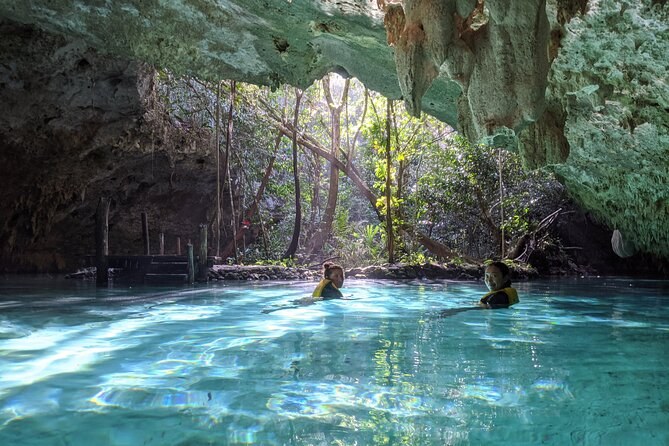
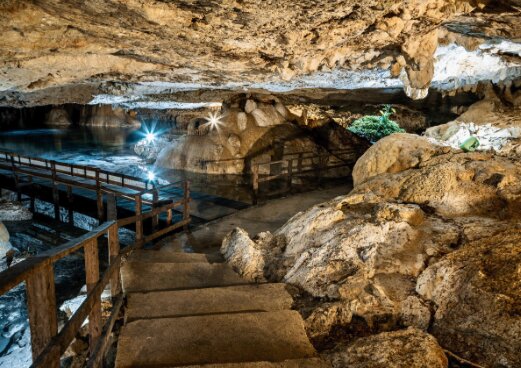
Gran Cenote, Dos Ojos and Taak Bi Ha are separate entrances to one flooded cave. They will look nothing alike to you — one half-open with turtles under your mask, one a pair of sinkholes, one a sealed lit chamber — and they are rooms of the same place.
That is the most useful thing you can know when you are choosing, because it means your question is never which cenote is best but which door suits your day. The comparison answers it for you.
An enclosed cenote has no seasons
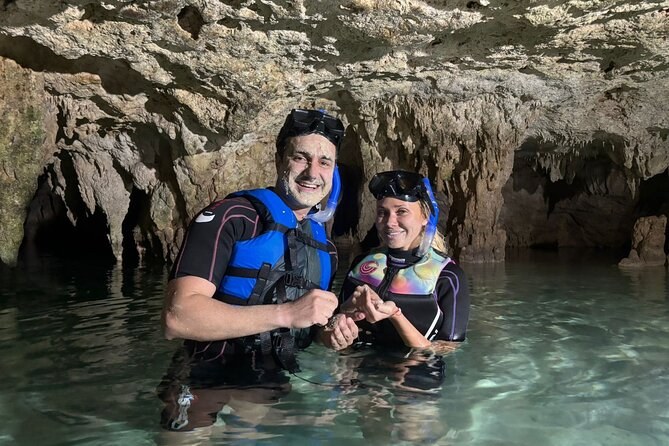
Taak Bi Ha holds 25 to 26 °C in February and in August alike, because no sunlight has ever reached it. Whichever month you book, the water you get into is the same.
Everything above ground changes on you — rain, crowds, sargassum on the coast, the price of your bed. The water in a sealed chamber does not, which makes the cavern cenotes the reliable half of anything you plan. The month-by-month page works through the rest.
Sunscreen is banned, and it is not fussiness
A cenote is groundwater moving slowly through rock. There is no current to flush anything out and no tide to dilute it, so whatever you bring in on your skin settles on formations that took tens of thousands of years to grow.
Most cenotes here ban all of it, including the biodegradable kind, and one turtle-snorkel departure bans it entirely for your whole day. What you wear instead is a long-sleeved rash guard — the packing page is built around that one rule.
The numbers, in one table
| The fact | The number | Where it comes from |
|---|---|---|
| Sistema Sac Actun, underwater | 378.56 km | Second-longest known underwater cave system |
| Sistema Dos Ojos, surveyed | 82 km | 28 cenote entrances, absorbed into Sac Actun in January 2018 |
| The Pit | 119.1 m | Deepest known cave passage in Quintana Roo, found 1996 |
| The Barbie Line | about 415 m | A named cavern guideline out of Cenote Dos Ojos |
| Casa Cenote channel | about 230 m | Brackish, fresh water sitting on salt |
| Cenote Taak Bi Ha, depth | about 8 m | Fully enclosed, opened to the public in 2018 |
| Cenote Taak Bi Ha, temperature | 25–26 °C | Unchanged all year, because no sunlight reaches it |
| Cenote Calavera, haloclines | three | The first at about 10 m |
Survey and discovery figures from published sources; the cenote facts from guide and operator descriptions captured 27 August 2026.
The list, in one place
- Sac Actun: 378.56 km underwater, second-longest known.
- Dos Ojos: 82 km surveyed, 28 cenote entrances, absorbed January 2018.
- The Pit: 119.1 m, found 1996, deepest in Quintana Roo.
- Taak Bi Ha: opened to the public in 2018, and holds 25–26 °C all year.
- Casa Cenote: a channel 230 m long, fresh over salt.
- Cenote Calavera: three roof holes, three haloclines, the first at about 10 m.
compare Tulum Cenote tours side by side puts you in the water any of that is true of.
Questions this raises
Why does the Yucatan have no rivers?
Because the whole peninsula is porous limestone. Rain sinks straight through it rather than running across the surface, and then moves sideways underground. Every drop of fresh water here is below your feet.
What does the word cenote actually mean?
It is a Spanish rendering of the Yucatec Maya word ts'ono'ot. The Spanish approximation is the form that travelled, and it is what every sign and every listing uses today.
How was the Sac Actun connection found?
By divers surveying passage between the two systems in January 2018. Under the convention the smaller system becomes part of the larger, so Dos Ojos stopped existing as its own system that month and Sac Actun grew by 82 kilometres.
Are the cenotes fed by the sea?
The inland ones are fresh groundwater. The ones near the coast are brackish, because salt water pushes in underneath the fresh and the two sit in layers you can see. Casa Cenote is the clearest example of it here.
Every one of these is under the water you are about to swim in, which is a better reason to get in early than any of the usual ones. Tulum Cenote Tours sets every departure against the others, and compare Tulum Cenote tours side by side sorts them by what the fare covers. Tulum Cenote guided tours sorts the same list by what you actually pay.
Departures that fit this question
Chosen for what this post covers rather than for what sells.