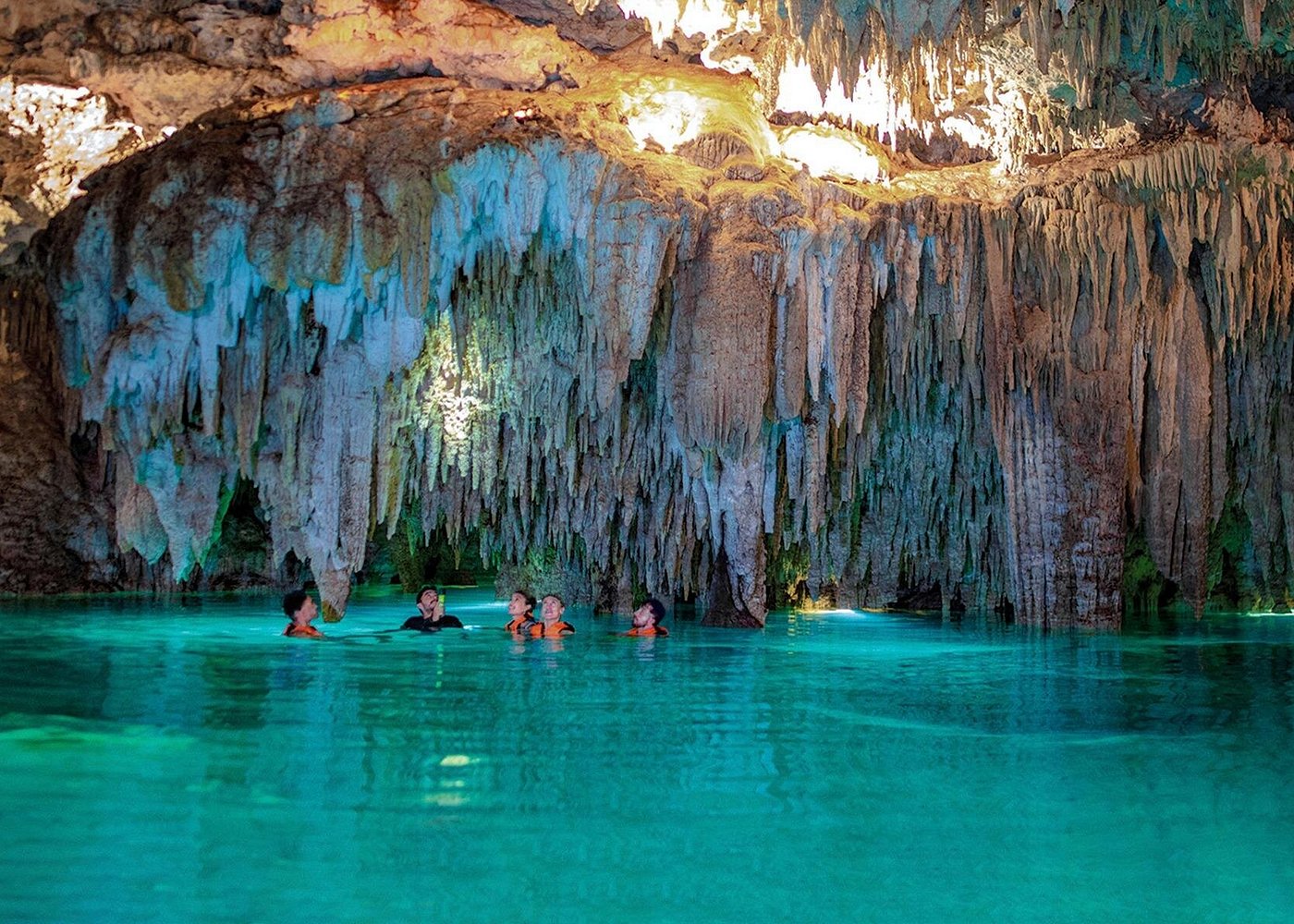
The cenote and the lagoon
What makes this tour unusual is the pairing. Most combination days on this coast put a cenote next to the Tulum ruins and stop there. This one adds a coastal lagoon, so you get fresh water underground and salt water at the surface in the same afternoon — two entirely different kinds of snorkelling.
The contrast is the point. A cenote is still, cold, clear and enclosed by rock; a lagoon is warm, open, tidal and full of fish that behave nothing like the small freshwater species in a cenote. Doing both in one day teaches you more about the coast than doing either twice.
Six and a half hours, which is the other selling point
The comparable Cancun combination days on this site run eight to twelve hours, and travellers on several of them report longer still. This one runs six and a half for four stops, and it is among the most reviewed listings in the catalogue.
That is worth weighing against the cheaper options. A tour that costs less and takes twelve hours is not obviously better value than one that costs more and takes six, particularly if you have limited days on this coast. See costs, fees and timing for how the fares compare once fees are added.
Season affects half of this tour
The cenote leg is close to season-proof. Groundwater temperature barely moves across the year, the cenotes are shaded, and rain does not affect the swim.
The lagoon leg is not. Sargassum — the seaweed that drifts onto this coast in warmer months — can badly reduce visibility in coastal water, and travellers reported exactly that in summer, with December to mid-April cited as the clearer window. On a bad sargassum day the cenote is completely unaffected, which is an argument for booking a tour that includes both rather than a sea-only trip.
What is not published about El Sueño
The cenote does not publish opening hours or a gate price that any independent source states, and it does not appear in the standard published guides to Tulum's cenotes. Like a great many cenotes here it sits on private or communal land and reaches visitors through an arrangement with an operator.
There is no way to invent a location, an opening time or a price for it. What is stated is what the itinerary confirms. If you want a cenote you can drive to and plan around, Gran Cenote and Parque Dos Ojos both publish an address, hours and an admission figure.
What to bring for a two-water day
- A rash guard rather than sunscreen. It satisfies every operator's rule on this coast, and the lagoon leg means real sun exposure.
- Your own mask if you own one. It earns its place twice on this itinerary.
- A full change of dry clothes, not just a towel — you will be wet twice and the transfers are air-conditioned.
- Cash in pesos for anything collected on the day. Read your own booking for what applies.
More at what to wear and bring.
Two waters, one afternoon
Doing both swims on one day also makes the geology legible in a way neither does alone. The cenote is the top of a flooded cave system that drains this whole peninsula; the lagoon is where that system reaches the sea. You are looking at two ends of the same water, an hour apart.
How it compares
If the lagoon is the appeal, one other tour on this site pairs a cenote with lagoon snorkelling and skips the ruins entirely — three and a half hours, the shortest tour in this catalogue. If the ruins are the appeal, Tulum ruins and cenote tours compares all of them on real cost and water time. And if what you actually want is more cenotes rather than more variety, the half-day cenote tours visit two or three in less time than this takes.