What the turtle swim actually is
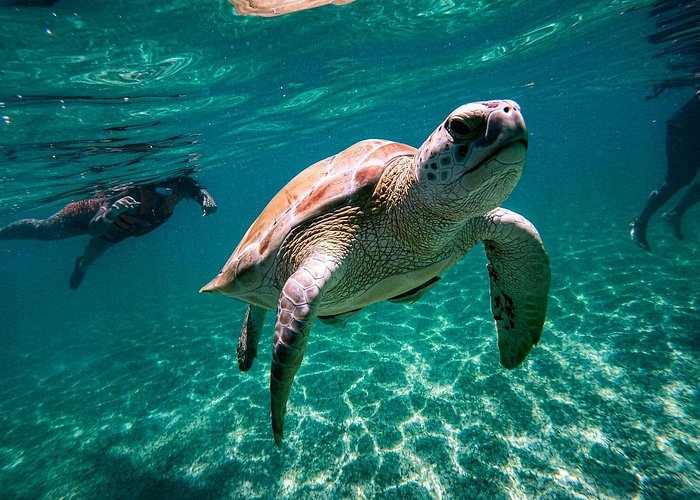
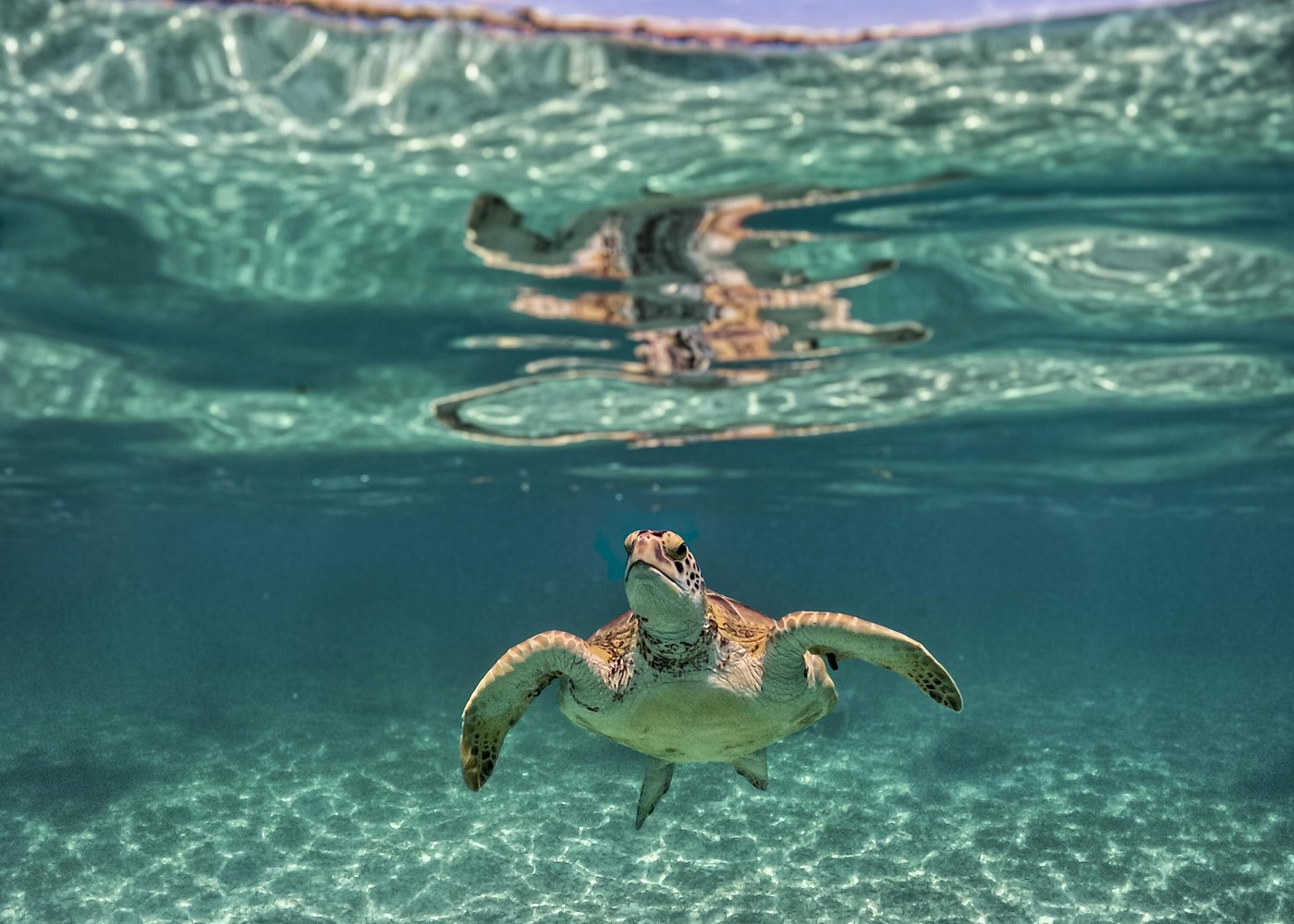
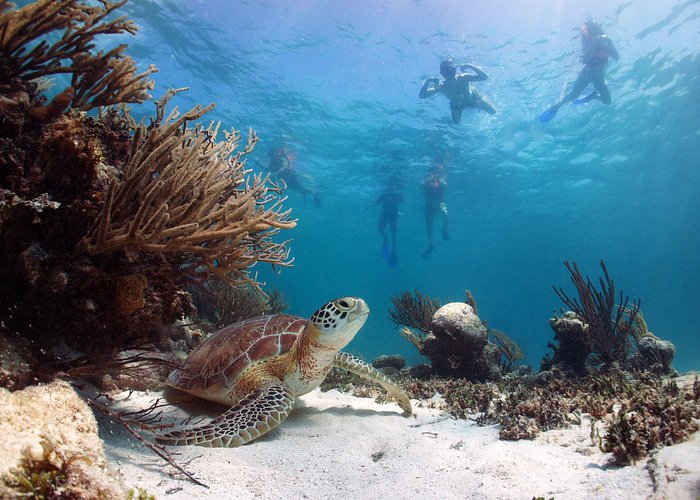
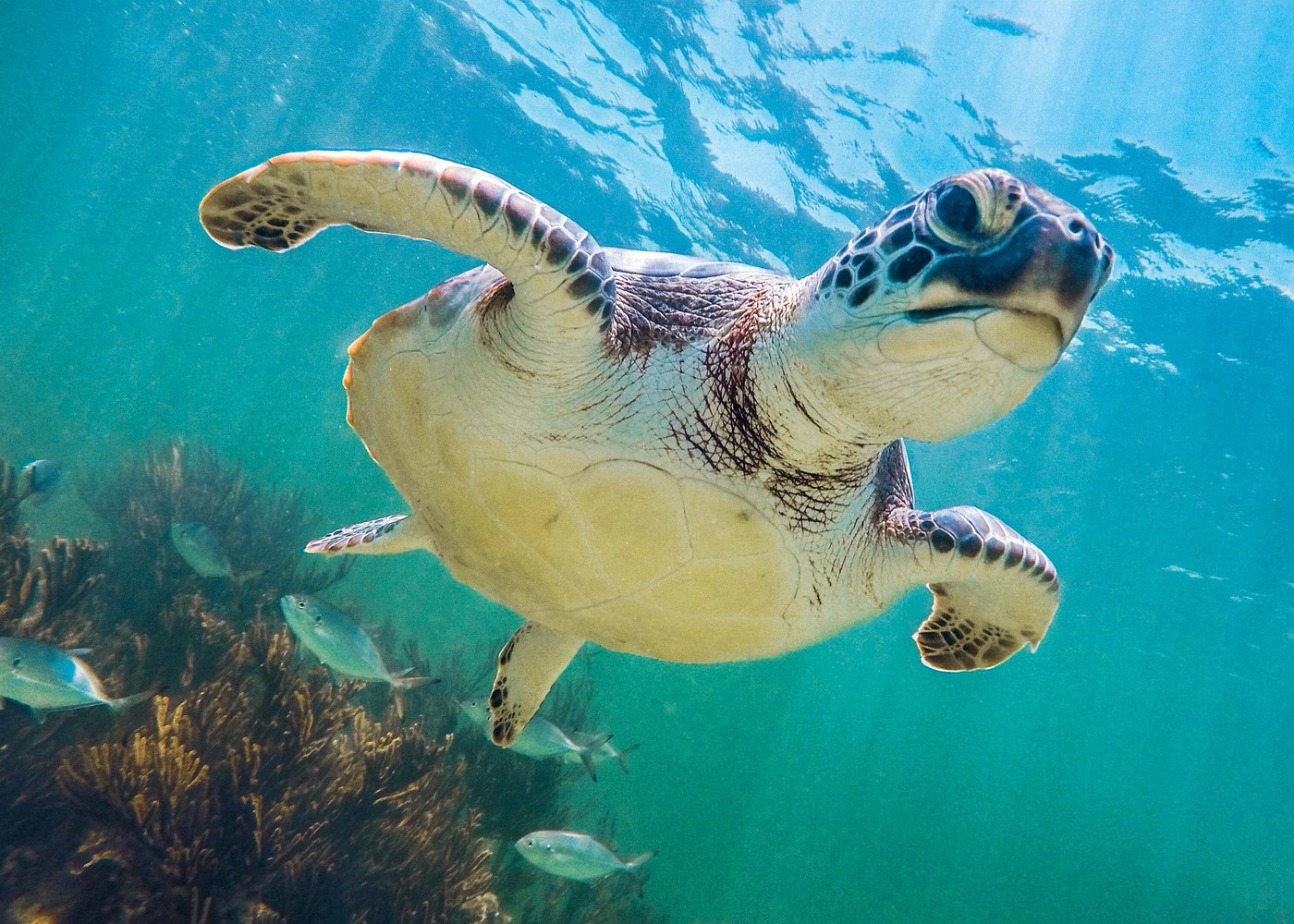
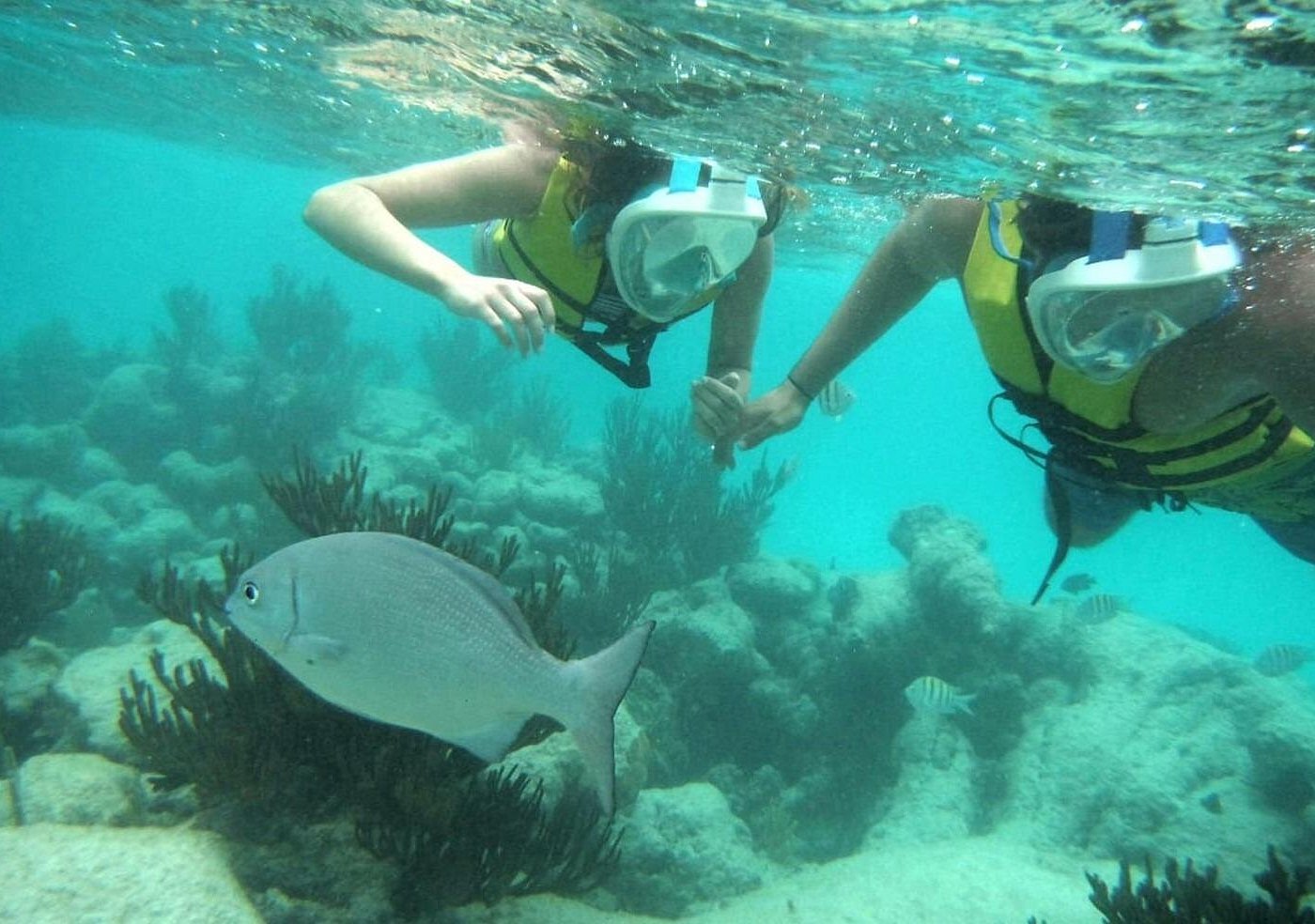
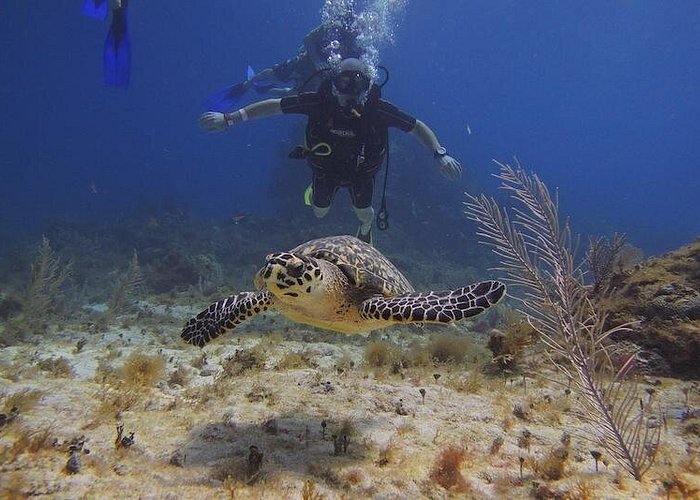
Akumal Bay sits between Tulum and Playa del Carmen, a shallow sheltered bay with seagrass beds close to shore. Green sea turtles feed there, and because the water is shallow and calm you can snorkel above them without diving. It is one of the few places in the Caribbean where seeing a wild sea turtle is close to routine rather than a matter of luck.
Access is regulated. Snorkelling is done with a guide, life jackets are compulsory in the bay, and there are limits on how close you may approach. Every tour here includes an aquatic guide for that stop.
The turtles are not in the cenote
This is the single most persistent confusion on this coast, and it comes straight from tour names that put both words in one line. Cenotes are fresh groundwater in collapsed limestone caves inland. Akumal Bay is the open Caribbean. They are separate stops, usually an hour or more apart, on the same day.
Cenotes hold small freshwater fish and, in the roofed ones, bats. They do not hold sea turtles, and no operator claims otherwise once you read the itinerary rather than the title.
Season matters here, unlike the cenotes
The cenote leg of these tours is close to season-proof: groundwater temperature barely moves across the year and the cenotes are shaded. The Akumal leg is not.
Sargassum — the seaweed that drifts onto this coast in warmer months — can badly reduce visibility in the bay, and travellers reported exactly that in summer. December to mid-April is the more reliable window for the turtle swim. On a bad sargassum day the cenote on the same tour is completely unaffected, which is a reason to book the pairing rather than a turtle-only trip.
Watch the Akumal admission line
Akumal Bay charges an access fee, and the tours here do not agree on whether it is covered. A pair of the listings above come from the same operator running the same three stops from two departure points: one marks Akumal admission as included, the other marks it as not included. There is no way to resolve that — each card states its own listing, and you should confirm on the booking page before you pay.
Most of these tours also collect a separate charge on the day for the Tulum archaeological site, which is itself three stacked fees. The arithmetic across the catalogue is on costs, fees and timing.
Which cenote comes with the turtles
Mostly cave cenotes. Several of these tours pair Akumal with Cenote Nohoch or Parque de Cenotes Yax-Muul, both enclosed, dark and formation-heavy, and travellers regularly arrive expecting an open turquoise pool. Others visit Canamayte, where a semi-open cenote and a cavern sit five minutes apart, which is the safer pick if your group is divided about caves.
The confirmed cenote for each tour is named on its card above. For what each one is like, see the cenotes around Tulum, one by one.
Sunscreen is the rule to check
Operators on this coast contradict each other outright, and on these tours the stakes are higher because you are entering a reef environment as well as an aquifer. One operator here asks you to apply nothing at all, biodegradable included, until after both swims. Others permit biodegradable only. At least one requires a shower before entering the cenote.
A long-sleeved rash guard satisfies every version of the rule and protects you better than lotion does in any case. More on this in what to wear and bring.
How long the day runs
Six to ten hours depending on where you start. Departures from Tulum are consistently shortest, Cancun departures longest, and one operator here runs the identical three stops an hour faster from Tulum than from Playa del Carmen. If a shorter day matters, that is the lever.