What Cenote Mariposa is
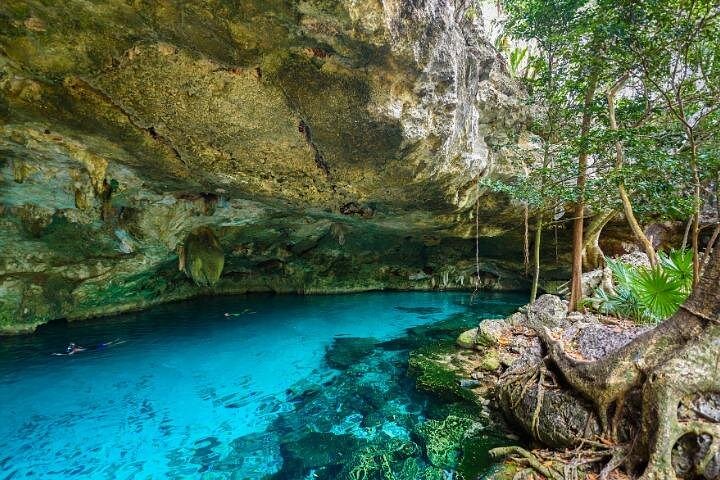
Mariposa is a semi-open cenote — a broad pool sunk into the ground like a shallow crater, open to the sky but ringed by rock and jungle, with clear turquoise water and stone or wooden steps down to it. It is the bright, easy end of the cenote spectrum rather than the cavern end: shallow edges, good light, and an unintimidating entry for anyone who is not a confident swimmer.
The name means butterfly, and operators attribute it to the range of colours in the water. It is a good first cenote, and it is the kind that photographs the way people expect a cenote to look.
Two operators, two contexts
This is where Mariposa needs care, and it is worth setting out plainly.
The listings here are guided days from Cancún whose published stop lists name Cenote Mariposa. Separately, a different operator running half days on the Tulum–Cobá road describes a Cenote Mariposa sitting inside Canamayte Eco Park, alongside the cavern cenote Chen Ha — and independent visitor accounts of Canamayte describe the same pair.
Both statements come from operators. Neither can be checked from a booking page. So treat them as separate places: the Cancún tours are listed here, the Canamayte tours are listed on their own page, and no claim is made that the two are the same water. It would look tidier to merge them and it would be a guess.
One listing contradicts itself
On the cheaper of the two listings here, the structured stop list names Cenote Mariposa while the prose directly above it describes continuing on to the nearby Cenote Chen Ha. The page title and the operator's own summary both say Mariposa.
Where a listing disagrees with itself, the structured stop list is the more reliable half. So Mariposa is what is recorded, the conflict is disclosed rather than hidden, and Chen Ha may well be visited too. Reviewers on that tour add a further wrinkle: several describe two cenotes where the listing shows one.
Read the second tour's reviews before booking
The cheaper Cancún pairing is among the most reviewed listings on this coast, and its complaint pattern is unusually consistent. Many independent reviewers report a shopping stop of an hour and a half to two hours that does not appear anywhere in the published itinerary and cannot be opted out of. Others describe the day running considerably longer than advertised, and itinerary changes made without notice.
It remains a well-rated tour overall and it is genuinely cheap. But an unlisted retail stop of that length on a day already running eight to nine hours is a material part of what you are buying, and it is not in the listing. The other tour here does not draw that complaint.
What the fees look like
Both tours collect on the day. The cheaper one takes a cenote conservation fee of US$25 per person plus a Tulum zone entrance of US$5 per person — and that US$5 is one of six different figures operators quote for Tulum admission, which is itself three stacked fees. See visiting Tulum for why those numbers never agree.
Work out the fare plus every compulsory charge, per person, before comparing. The full arithmetic is on costs, fees and timing.
Getting there
On a tour, in practice. Mariposa is not set up as a walk-up destination with a ticket window and published hours, and both tours here include transport, guiding and cenote admission from Cancún. If you want a semi-open cenote you can plan a day around independently, Gran Cenote publishes an address, hours and a price.