What "Riviera Maya" means on a booking page
It is a marketing region rather than a town, and on a tour listing it usually means the hotel corridor along Highway 307 between Puerto Morelos and Tulum, taking in Playa del Carmen, Puerto Aventuras, Akumal and the all-inclusive resorts in between.
That matters because the corridor is roughly a hundred kilometres long. A pickup at its southern end is forty minutes from the Tulum cenotes; one at its northern end is closer to Cancun than to Tulum. Two guests on the same tour can have days that differ by three hours, and neither listing is wrong.
Check your pickup band before you book
Several operators divide the corridor into charge bands. One tour elsewhere on this site charges US$15 per person between Bahia Puerto Principe and Puerto Aventuras, US$25 to Colosio Street and US$35 beyond that. A private tour charges US$20 between Maroma and Puerto Morelos and US$25 onward to Cancun.
None of that is hidden, but it sits in the exclusions rather than the price. Find your hotel on the operator's band list before you compare two fares, because a US$35 per-person surcharge changes the ranking for a family of four.
The spread of what is on offer
The set collecting from Riviera Maya hotels is small, and they are unusually varied for such a small set.
- The cheapest fare on this site, at US$21.46 — a half-day Tulum and cenote pairing. It collects US$40 per adult and US$20 per child at the gate, so the real cost is US$61.46 per adult. That is still competitive; it is simply not what the headline says.
- A four and a half hour, three-cenote day with no ruins leg, which is the most water time per hour of any Riviera Maya departure.
- A small-group day with all fees stated as included — genuinely rare on this coast, and worth the higher fare if you dislike being asked for cash at a gate.
- A heavily reviewed six and a half hour day pairing a guided Tulum visit with a cenote and lagoon snorkelling.
All-in versus advertised
This is the decision that matters most here, because the Riviera Maya set contains both extremes. One tour advertises the lowest fare on the site and collects forty dollars a head on arrival. Another advertises a much higher fare and states that everything is included.
Once you do the arithmetic per person, for your whole party, the gap between them narrows considerably — and the second gives you a day with no cash handover, no card-versus-cash question and no surprise. Whether that is worth paying for is a preference rather than a fact, but you should at least make the comparison on the real numbers. They are set out on costs, fees and timing.
Which cenotes these tours reach
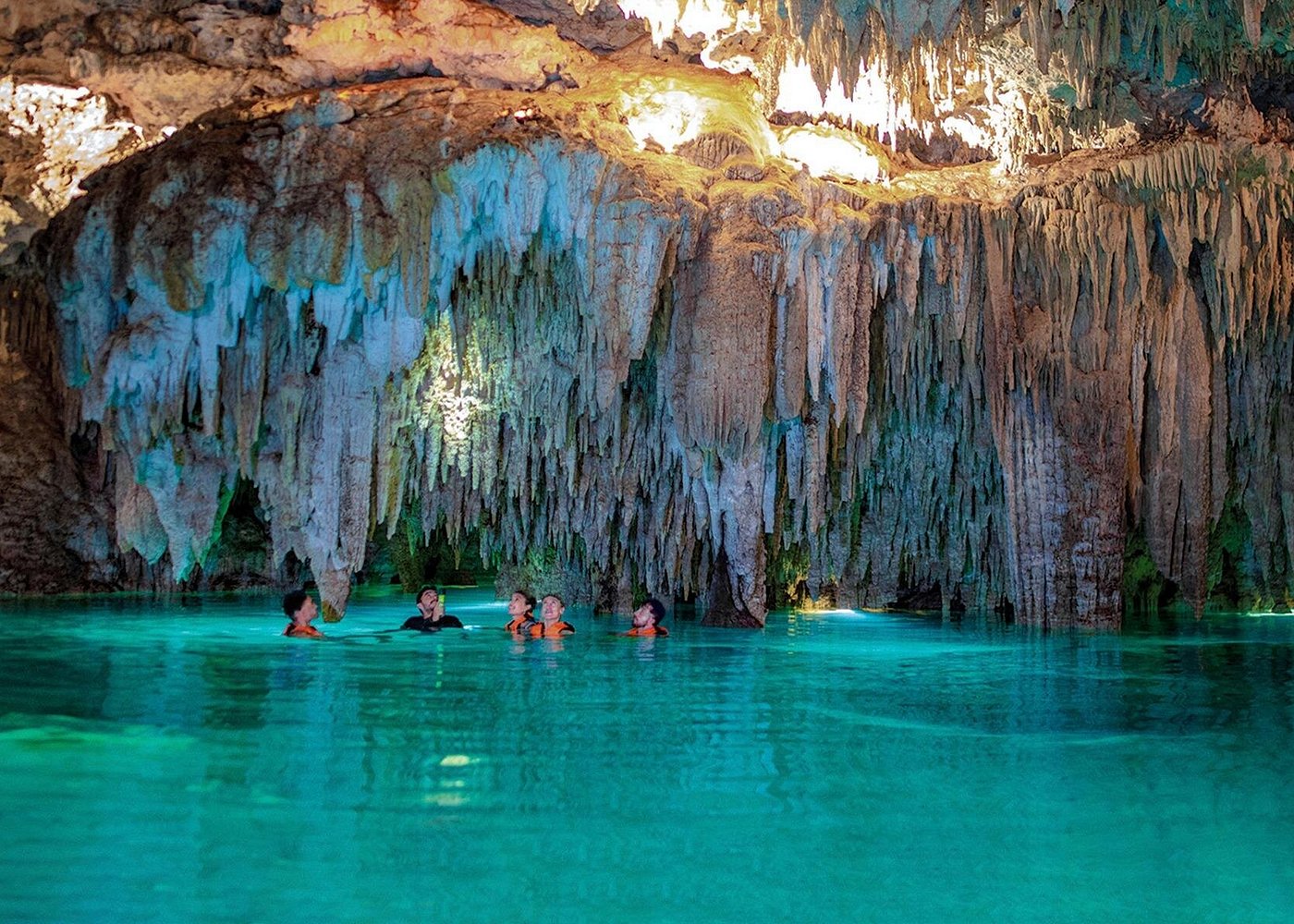
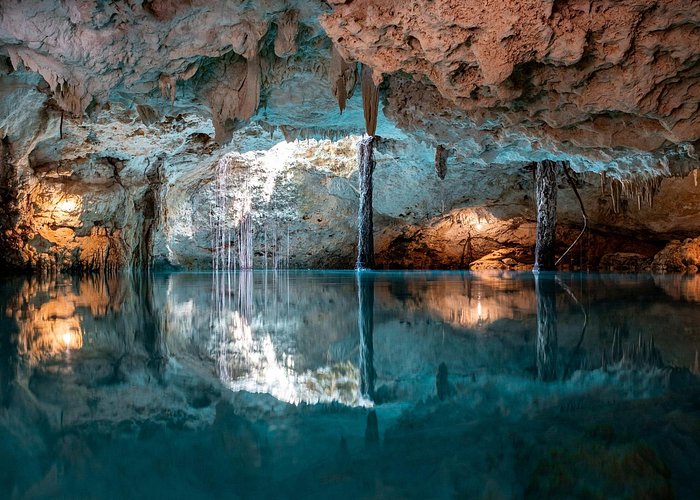
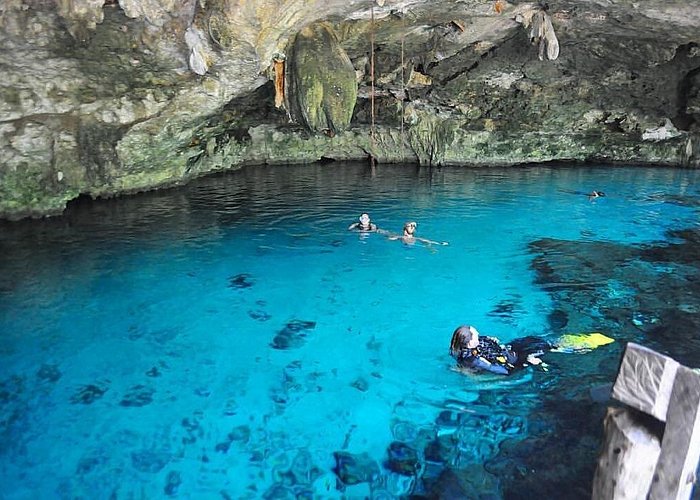
Four different ones, and they are unusually well spread. Canamayte holds a semi-open cenote and a cavern five minutes apart. Casa Tortuga is a four-cenote circuit mixing open, semi-open and cave. Cenote Yum-Ha and Cenote El Sueño are open swims paired with lagoon snorkelling.
That means the Riviera Maya set covers every kind of cenote on this coast between them, which is not true of the Cancun or Tulum sets. If you want to see contrasting types and are staying in the corridor, you can do it without changing base.
How this compares with the alternatives
Against a Cancun departure, a Riviera Maya pickup saves roughly two hours on a comparable itinerary. Against a Tulum departure it costs you about an hour. If your hotel is at the southern end of the corridor, the difference from Tulum is small; at the northern end, look hard at the day length before booking a full-day combination tour.
If the day length is the problem, the half-day cenote tours and the private tours both cut the collection loop, and several of them collect from Riviera Maya hotels too.